Song Eun-yi's Annual Leave Comment Sets a Standard for Workplace Variety Shows
Song Eun-yi and Kim Sook’s VIVO TV debate turned one worker’s annual leave dispute into a wider discussion of rights, workplace burdens and public SNS use.
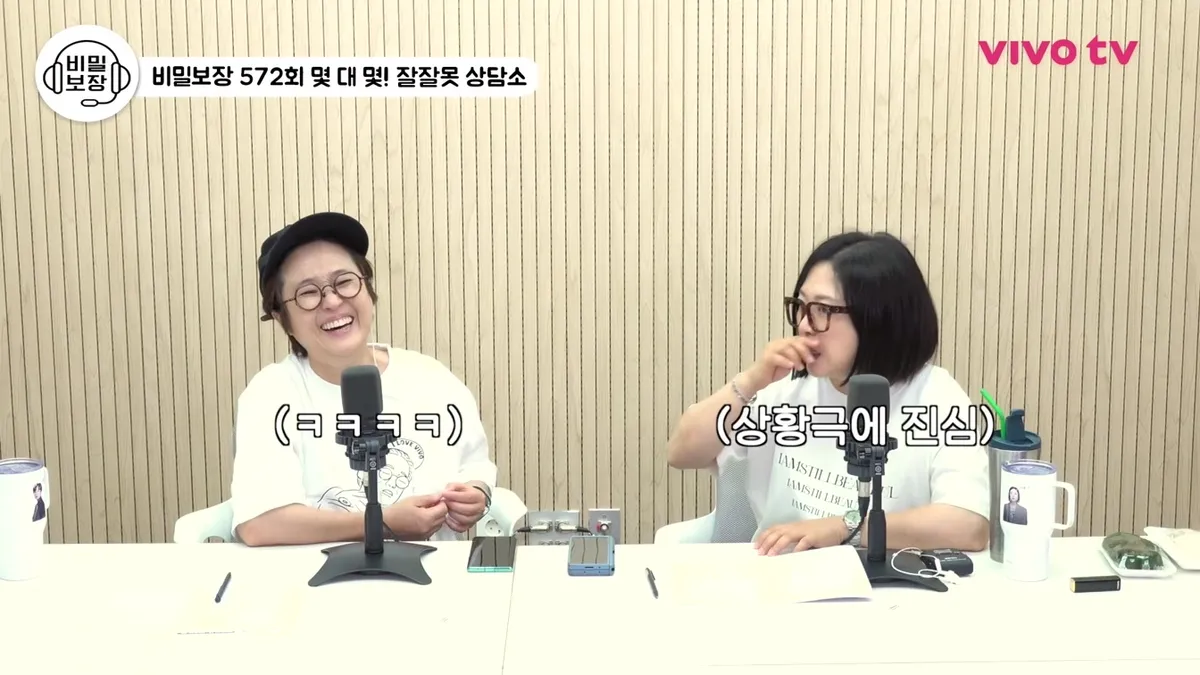
Song Eun-yi and Kim Sook brought a familiar workplace dispute into the language of entertainment through the “How Many to How Many? Right-and-Wrong Counseling Center” segment on episode 572 of VIVO TV’s “Bimilbojang.” The viewer story was simple: an office worker took annual leave at short notice because they were ill, felt better in the evening, stopped by a cafe, and uploaded the visit to an SNS story. A coworker who had covered the person’s work then expressed discomfort. This article examines why Song Eun-yi’s judgment that “annual leave is a right” went beyond a single variety-show remark and became a debate over standards in workplace culture.
The key question is not simply who was ruder. The right to leave is an institutional matter, the burden placed on coworkers is an organizational management issue, and the decision to post on SNS belongs to the emotional terrain of relationships. Because those three layers overlapped in one scene, the story lingered longer than a light comic anecdote.
The strength of the format is visible in the official video. VIVO TV released “Bimilbojang” episode 572 on June 3, 2026, with a running time of 49 minutes and 28 seconds. The video description places the “How Many to How Many? Right-and-Wrong Counseling Center” segment at 11 minutes and 52 seconds, and presents the case along the lines of “a message from a superior after taking annual leave because of illness and going to a cafe.” What is confirmed first is less the incident itself than the format around it. “Bimilbojang” turns an emotional clash into a discussable scene by having Song Eun-yi and Kim Sook divide responsibility in numbers while responding to a viewer-submitted story.
That structure works well as entertainment. Instead of listening to a legal lecture, viewers follow the two hosts’ differing judgments and map their own workplace experiences onto the case. Considering that VIVO has presented “people themselves are content” as part of its company direction, this scene fits the VIVO production grammar of turning an individual story into material for a broader social conversation. Laughter is the entrance; the standard left behind is what remains.
The two hosts’ numbers diverged sharply. Song Eun-yi assigned 0.5 of the responsibility to the person who submitted the story and 9.5 to the coworker. Kim Sook, by contrast, judged the case closer to 10 for the story submitter and 0 for the coworker, stressing the practical advice that it is better not to do anything that could invite misunderstanding. The same story therefore became a collision between a rights-centered interpretation and a relationship-centered interpretation.
That numerical gap is the core of the article’s value. Song Eun-yi looked first at the essence of the annual leave system, while Kim Sook looked first at the emotional cost that remains inside a workplace. Reducing the matter to only one correct answer misses reality. In actual workplaces, a work gap can remain even when a person has a right to take leave, but the existence of that gap does not create a right for coworkers to monitor the person who used leave.
The Labor Standards Act draws one line, and the variety show revealed another. Article 60 of the Labor Standards Act guarantees paid annual leave to workers who meet certain conditions and sets out the principle that an employer should grant leave at the time requested by the worker. Easy Law, the public legal information service, explains paid annual leave and wage payment standards in the same general direction. Of course, an exception involving a change in timing may be discussed when business operations would be seriously disrupted, but that is a question of organizational management, not something for a coworker to judge after seeing an SNS post.
Song Eun-yi’s view was therefore not legal advice but an entertainment-program opinion. Still, the standard it pointed to is connected to the institution itself. Annual leave does not become legitimate only if a sick person stays in bed all day. If the mere fact that someone stopped by a nearby cafe during recovery is used to deny the purpose of the leave, annual leave starts to look less like a right to rest and more like a permit that must be proven to coworkers.
This is why the story remains meaningful as a K-entertainment article. If the discussion is consumed only as Song Eun-yi’s personal conviction, it becomes shallow. The more important point is how a variety program popularized a sensitive workplace standard. “Bimilbojang” does not fix its conclusion like a specialist panel debate. Instead, by placing the two MCs’ opposing ratios side by side, it asks viewers to recalculate the rules of their own organizations, the distance between coworkers, and their habits around public SNS use.
That is also one of the strengths of recent variety content. It does not have to push a grand social agenda head-on. When a conflict that frequently occurs in everyday life is compressed into a short story, the response can be faster. This annual leave case shows the moment when a company’s responsibility for staffing and work allocation is shifted into an emotional fight between individuals. Because the program caught that point, the purpose behind Song Eun-yi’s statement that “annual leave is a right” goes beyond a simple cathartic remark.
The next standard is not SNS itself but management of the work gap. The first question should be how a company replaces same-day annual leave or sick-leave-like annual leave, and how it adjusts work that has been passed on to coworkers. Individuals also need a standard. Private life during leave should be protected, but the reality that a public SNS post can touch a coworker’s emotional line also has to be managed separately.
For that reason, the conclusion of this case is neither “it is fine to post” nor “you must not post.” The legitimacy of annual leave is not shaken by an SNS photo. At the same time, a good organization does not monitor the person on leave, and good communication does not turn the burden carried by those who remain at work into a personal attack. That is the line left by VIVO TV’s counseling center.