Mamamoo's 4WARD Sets a New Standard for Full-Group Continuity
Mamamoo returns with 4WARD and 4 Flowers, testing how a long-running K-pop group can turn reunion into renewed momentum.
Mamamoo reopened its full-group activities at 6 p.m. on June 4, 2026, with the special single 4WARD and its title track, 4 Flowers. The importance of this return is not limited to the release of new music. It lies in how the four members, who continued their individual activities for about three years and eight months after MIC ON in October 2022, are putting the group brand back into motion. This article examines how Mamamoo's 4WARD uses a new song, an official music video, and the starting point of a world tour to redesign what full-group continuity can mean for a long-running K-pop group.
The question created by a three-year-and-eight-month gap
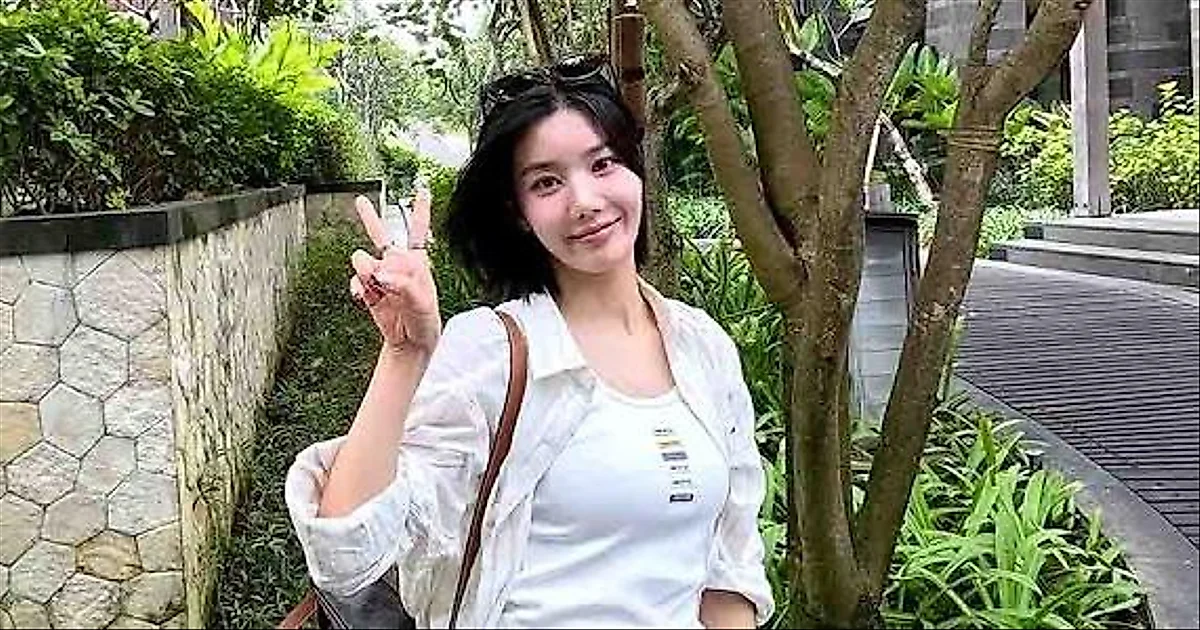
Mamamoo is a team defined by the distinct vocal colors of its four members: Solar, Moon Byul, Whee In, and Hwasa. That is why the break in full-group activity was never simply a matter of time between promotions. As each member's solo and unit work accumulated, the bigger question became what the group could newly show when it returned as four.
The title 4WARD offers the first answer. By combining the number four with a word that points ahead, the name suggests something closer to moving in the same direction than merely getting back together. The key point is that the emotion of the comeback does not remain fixed on nostalgia. Mamamoo previously connected individual member identities with the team's overall color through the 2018 4 Seasons 4 Colors project. This time, the group uses that structure again, but translates it into the language of continued activity.
The restrained temperature chosen by 4 Flowers
The title track 4 Flowers chooses the breathing room of medium pop rather than the high-intensity performance style often attached to a major comeback. Over strings and a drum beat, the four voices take turns moving to the front, and in the chorus their harmonies form the song's emotional conclusion. It is a choice that places directly at the center the area in which Mamamoo has been tested and recognized for the longest time.
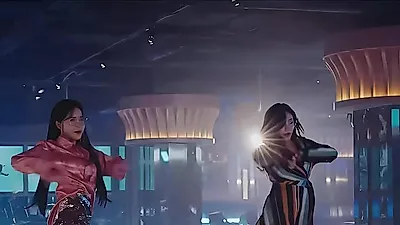
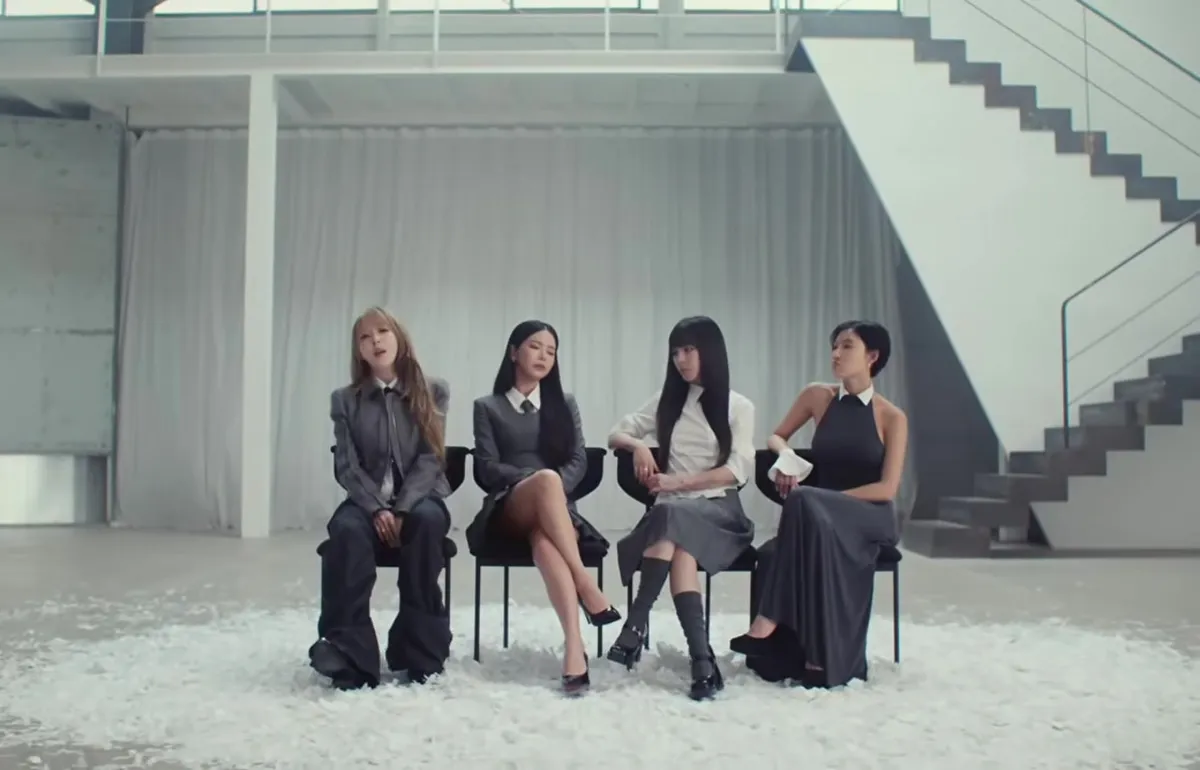
The same direction can be read in the official music video. In the indoor scenes, the four members sit side by side on chairs while maintaining different expressions and postures. In the outdoor scenes, they move together through forests and fields. The group shot around the 1-minute-46-second mark is especially important because it gathers separate personal narratives back into a single frame. Props such as chess pieces, papers on the wall, and scattered flower petals evoke arrangement and repositioning more than competition. The image of roots suggested by the song becomes, here, not just a musical metaphor but a visual structure.
A strategy between fan song and comeback title
4 Flowers sits between the sentiment of a fan song and the function of a comeback title. The lyrics express separation and reunion through the cycle of flowers, while the album title emphasizes the direction of moving forward. For the fandom, the song works as a reward for waiting. From an industry perspective, it is also a test of whether full-group activity can still move a tour, a music release, and video content together.
This choice puts trust in the relationship ahead of exaggerated competition over records. In the recent K-pop market, returns by long-running groups have generally split into two paths. One reproduces the formula of past hits. The other acknowledges each member's career first and then explains anew why the team is still necessary. Mamamoo is closer to the latter. The four members are not being pressed into the same tone. Instead, their voices remain separated while creating the persuasiveness of one song.
The world tour will determine the weight of that continuity
The next point of verification is MAMAMOO 2026 WORLD TOUR [4WARD], which begins with performances from June 19 to 21 at Olympic Hall in Seoul Olympic Park. If the new song is an emotional declaration, the tour is the stage on which that declaration can be tested in the actual market. The fact that the project begins with three Seoul concerts shows that 4WARD is not a one-off commemorative single, but a project designed with a performance narrative in mind.
The crucial issue is how the message of the new song expands into stage composition. Because 4 Flowers puts vocal recovery and the restoration of relationships at the front, the concert's balance between each member's solo narrative and full-group harmonies will matter. Mamamoo's live ability is already well known, but the success or failure of this activity does not depend on proving skill again. It depends on how convincingly the group shows four separate careers being tied back into one tour brand.
The standard for a full group is being rewritten
Mamamoo's 4WARD has too clear a structure to be consumed only as a long-awaited full-group return. The three-year-and-eight-month interval, the tour launch aligned with the group's 12th anniversary point, and the restrained sound of 4 Flowers all move toward the same question: how does a team prove that it is continuing?
The information gained from this activity is found there. Mamamoo does not treat the full group as a restoration of the past. Instead, it presents it as a group operating model that can still function after the members' individual activities. What needs to be checked now is not only the first response to the music release, but the recombination on stage. If 4 Flowers functions in the Seoul concerts as more than a simple reunion song and becomes the central axis of the tour, 4WARD will become a practical benchmark for opening Mamamoo's next chapter.
Related articles