Perfect Crown: After Its Ratings Success, Historical Accuracy Remains the Unresolved Risk
MBC drama Perfect Crown ended with a 13.8% peak, but its historical accuracy controversy has grown into a trust issue for platforms, public funding and overseas distribution.
The core of the controversy surrounding MBC's Friday-Saturday drama "Perfect Crown" is larger than a mistake in a single scene. The drama ended as a ratings success, reaching its own best nationwide viewership rating of 13.8%, but after the finale it became linked to a National Assembly public consent petition that passed 50,000 signatures and to discussions over reviewing a government support project. Taken together, the case shows that historical accuracy in K-dramas has become a risk that can no longer be closed off simply by correcting subtitles after broadcast.
This article examines why the historical accuracy dispute around "Perfect Crown" has moved beyond ordinary viewer complaints and into a question of trust involving platforms, production support and overseas distribution. The focus is not whether someone should be punished. The more important issue is where responsibility begins when a fictional constitutional-monarchy romance borrows symbols connected to real history.
First, the drama's performance was not minor. "Perfect Crown" was a 12-episode Friday-Saturday drama led by IU and Byeon Woo-seok. In its final episode on May 16, 2026, it recorded a nationwide viewership rating of 13.8%, closing with the highest figure of its run. Its premise imagined a fictional Republic of Korea in which a constitutional monarchy still exists, while its central romance followed a contract marriage between Seong Hee-ju, a woman from a chaebol family, and the royal figure Grand Prince Yi An. From the beginning, the series chose the accessible grammar of romantic fantasy, a format with a low entry barrier for general audiences.
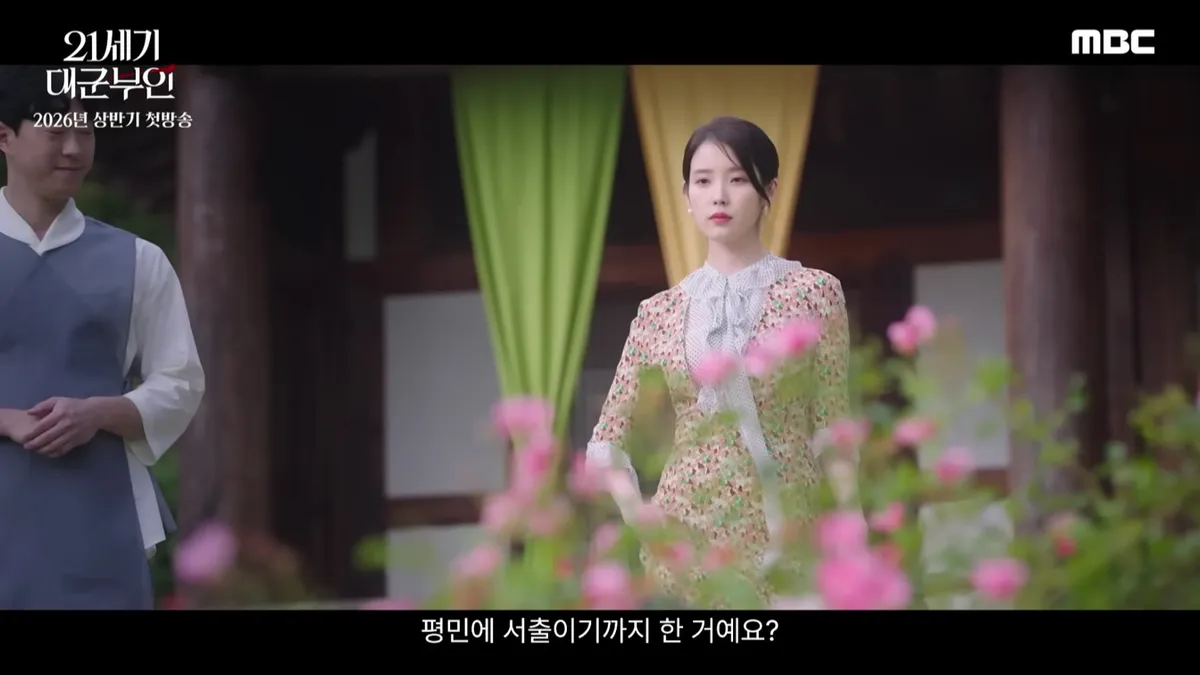
Yet strong ratings did not absorb the historical accuracy dispute. The problem centered on the enthronement scene in episode 11. In that sequence, Grand Prince Yi An appeared wearing a guryu myeonryugwan, and officials shouted slogans in the Cheonse line instead of manse. The basic tone visible in the official teaser had been built around combining court dress with the imagery of modern romance. However, the late-series enthronement scene was not merely a mood-setting device. It directly touched the language of state symbolism and hierarchy.
The important point is that a work is not automatically exempt from scrutiny simply because its genre is fantasy. Viewers may accept a fictional premise, but when that fiction takes in symbols from real history and the East Asian order, audiences also examine how those symbols are being borrowed. In an environment where K-dramas are consumed not only on domestic television but also at the same time through global OTT services, that distinction becomes even stricter.
After the controversy broke out, the production team issued an official apology, saying it had caused concern over the drama's world-building and historical accuracy. The team then revised the audio and subtitles in the disputed scene, adding that it could take time for some platforms to reflect the changes. Writer Yoo Ji Won also bowed in apology through a statement on the official website, acknowledging that the work's research and historical review had been insufficient.
Post-broadcast correction is a necessary measure. In this case, however, revision was closer to the starting point of the controversy than its end. Once a scene has spread through the broadcast, clips, screenshots and overseas platforms, the larger question is no longer only whether it was fixed. It becomes why the issue was not filtered out during production.
That question leads directly to the production system. Even when a series is not a traditional historical drama that places history at the front of its identity, the moment it uses symbols from a real cultural sphere, such as a royal family, official robes, rituals or forms of address, historical review becomes a risk-management item. It cannot remain only an additional task for the art team or a matter of dialogue supervision. For a work connected to public support, an assessment of quality inevitably extends beyond commercial results and into cultural impact.
The decisive factor that pushed the controversy into a second phase was the National Assembly public consent petition. The related petition was made public on May 22, 2026, and on May 26, its fifth day, it passed more than 50,000 signatures, meeting the requirement for referral to a standing committee. The petition contained forceful demands, including stopping the broadcast, removing the drama from domestic and overseas OTT and VOD services, and excluding related parties from future support.
However, the drama had already ended on May 16. As a result, the practical issue shifts away from stopping a broadcast and toward how to handle content that is already in distribution, as well as how historical accuracy controversies should be reflected in the evaluation of government-supported content. The Ministry of Culture, Sports and Tourism's response through the e-People petition system, stating that it would check the implementation process of the Korea Creative Content Agency support project and consider necessary measures, belongs to this context.
A petition does not immediately mean cancellation or sanctions. National Assembly review and government examination require procedure, and creative freedom must also be considered. Even so, the figure of 50,000 signatures is a signal that viewers were demanding an institutional answer, not merely expressing personal displeasure. A broadcaster cannot treat that lightly.
There is also a clear comparison case. In 2021, SBS's "Joseon Exorcist" was canceled after only two episodes amid controversy over Chinese-style props and historical distortion. "Perfect Crown" had already completed its run, and its genre is closer to romantic fantasy, so the same conclusion cannot be applied mechanically. Still, the two cases share one point. Domestic viewers no longer see errors involving historical and cultural symbols as simple prop mistakes.
This change is also tied to the overseas expansion of K-content. For international viewers, the detailed context of Korean history and ritual may be unfamiliar. That means a scene placed on a global platform can more easily settle into an image of what Korean content has shown. Even if the production team's intention was not distortion, the perception left by the result is a separate issue.
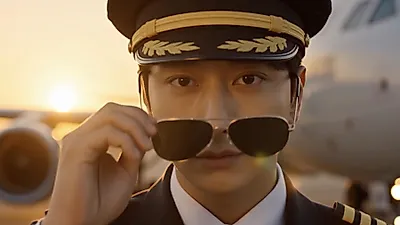
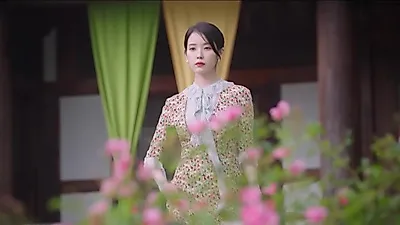
In its official teaser and promotional materials, the drama put modern romance and royal fantasy at the forefront. That choice itself is not the problem. The problem begins when fantasy borrows symbols from real history. At that moment, viewers ask for both genre pleasure and cultural accuracy. The more successful a work becomes, the larger that demand grows.
The next checkpoints in the "Perfect Crown" case are threefold. First, what conclusion the National Assembly petition reaches if it proceeds through standing committee review. Second, what standards the Korea Creative Content Agency applies when treating the historical accuracy controversy in the outcome evaluation of its support project. Third, how transparently domestic and overseas OTT and VOD services handle notices about revised versions and manage redistribution.
The production team's apology and scene revisions are the minimum steps needed for damage control. The larger question left by this controversy sits inside the production schedule of the next project: when historical consultants are brought in, who conducts the final review of rituals, clothing and forms of address, and how much time is secured for correction before global release. If the industry cannot answer those questions, the next hit drama may end up paying the same cost in trust.
Related articles