Kong Kong Farm Farm: How the Ranch Variable Could Reshape a Friend Variety Show
tvN's new Friday variety show Kong Kong Farm Farm moves Lee Kwang-soo, Kim Woo-bin and Doh Kyung-soo from fields to a Jeju ranch.
tvN's new variety show "Where Beans Are Planted, Beans Grow: Want to Farm, Want to Farm Animal Ranch" will premiere on Friday, June 19, at 8:35 p.m. Commonly shortened to "Kong Kong Farm Farm," the program is a real variety series built around Lee Kwang-soo, Kim Woo-bin and Doh Kyung-soo spending time on a farm stay at a ranch on Jeju Island. This article examines what it means for tvN's Friday entertainment lineup and for the broader flow of observational real variety programming that "Kong Kong Farm Farm" has chosen to move the proven friendship dynamic of its predecessor, "Kong Kong Pat Pat," into the more unpredictable setting of a Jeju ranch.
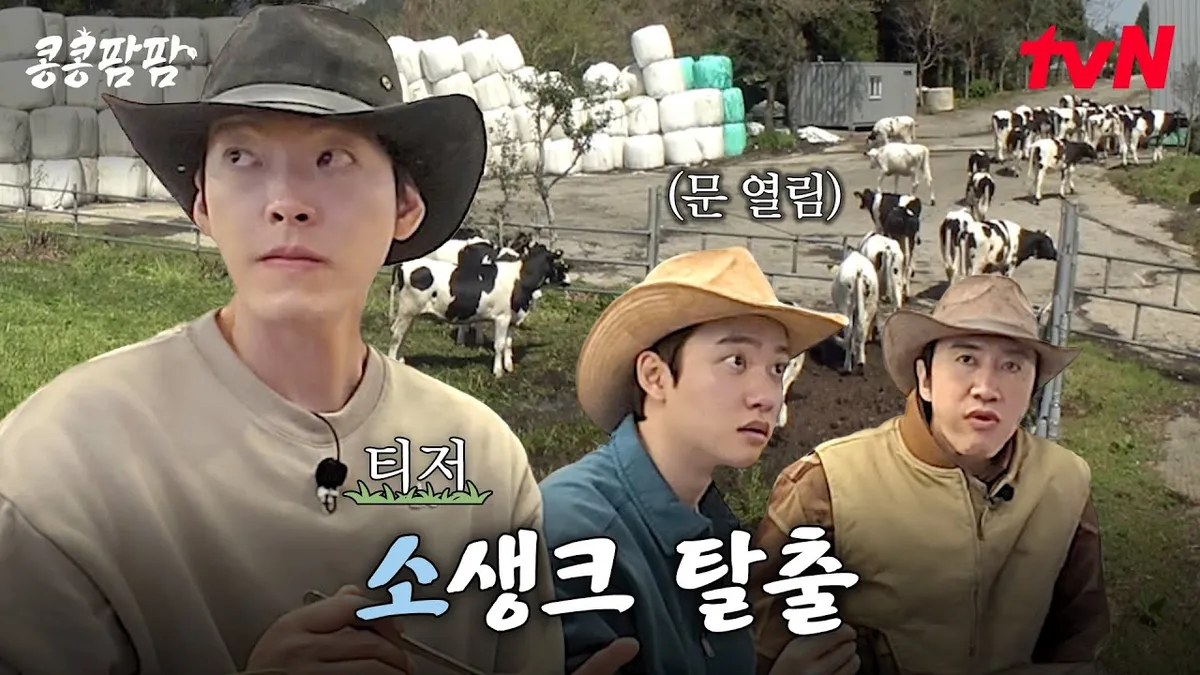
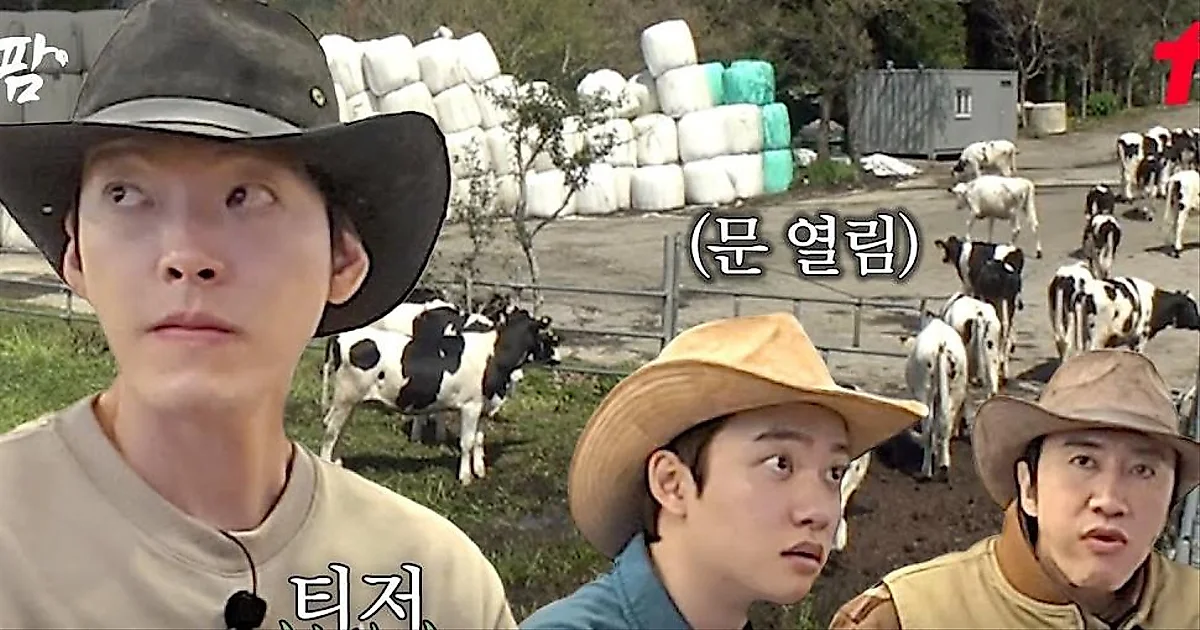
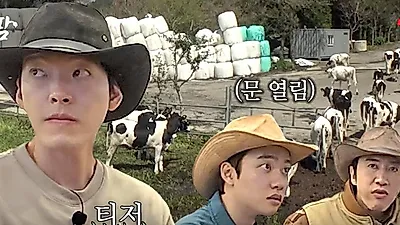
The key material available on the official tvN program page is a 35-second teaser. Its title is "What? The Cow Escaped? Welcome to Kong Kong Farm Farm," and the actual footage places a scene front and center in which the three cast members, wearing cowboy hats, look toward an open gate and the cattle inside the ranch. Rather than foregrounding the scenery of a restful Jeju variety show, the teaser puts an unexpected incident first. That choice makes the direction of the follow-up clear. This is not simply a program designed to consume the cast's existing closeness again; it is aimed at placing familiar personalities inside a work structure that is hard to predict and observing how they respond.
The predecessor's achievement came from the rhythm of relationships. To understand what the new setting means, it is necessary first to look at what sustained "Where Beans Are Planted, Beans Grow and Where Red Beans Are Planted, Red Beans Grow," the 2023 program known as "Kong Kong Pat Pat." That earlier show had a simple structure: Lee Kwang-soo, Kim Woo-bin, Doh Kyung-soo and Kim Ki-bang cultivated a field in Gangwon Province. Farming was less a grand mission than a device that revealed relationships. What viewers held onto was not the result of the harvest so much as the lived-in rhythm of longtime friends teasing one another, helping one another and occasionally pretending not to hear one another when work was in front of them.
That rhythm also produced a certain persuasive force in the ratings. The previous show began in the low 3 percent range nationwide among paid households for its first episode, and in the latter part of its run it recorded a peak viewership rating in the 5 percent range. Creating that kind of Friday-night flow without a large-scale survival format or a strongly competitive rule set was not a small result. The important interpretation is that even when the stimulus is mild, viewers will stay if the relationships feel alive. For that reason, the starting line for "Kong Kong Farm Farm" is not low. Fans already know the three cast members' ways of speaking and the distance between them, and the production team has already learned once how much intervention helps create laughter.
The ranch is less a scale-up than a device for variables. Why, then, move from a field to a ranch? On the surface, it is an expansion of space: from a field in Gangwon Province to a ranch in Jeju, from crops to animals, and from a relatively slow farming process to unexpected situations that require immediate responses. But the core point is not simply that the scale has grown. A ranch is a space where, however close the cast members may be, things are difficult to move according to plan. Animals, weather and labor demands can all intervene at the same time. In real variety, variables of this kind can become a stronger engine than any script.
That is why the cow-escape scene in the official teaser has news value. Lee Kwang-soo is a figure familiar with entertainment-show grammar, while Kim Woo-bin and Doh Kyung-soo are cast members whose relative strength is read as their faces when they are not performing. In production interviews, the planning intent of the previous show was close to capturing the natural behavior that emerges when longtime friends are together. The ranch setup now tests that strength again. The more often the three are thrown into flustered moments, the bigger the laughter may become; but if the same responses merely accumulate, fatigue with the sequel could also arrive quickly.
The assignment for Friday entertainment is to turn comfort into density. "Kong Kong Farm Farm" has been placed at 8:35 p.m. on Friday night, a slot that has to hold onto viewing momentum as audiences move into the weekend. Entertainment programs in this time period lose viewers quickly if they are too heavy, but if they are too loose they are consumed like background sound. The harmless laughter of the previous show fit this slot well. Still, if the follow-up merely repeats the same comfort, the density of its scenes will fall. Comfort is an advantage, but the moment the tension of editing disappears, it turns into slackness.
For that reason, the success variable for this program is less the name value of the cast than the structure of the work. If ranch labor is consumed like a simple penalty, the show will remain within the familiar picture of friends suffering through work again. If, by contrast, the process of caring for animals, adapting to the Jeju setting and learning the actual rhythm of ranch operations comes alive, the follow-up will gain observation points different from those of the previous show. Viewers may enter for the friendship, but the scenes that last are made when relationships pass through unfamiliar situations.
The new balance created by a three-person system is another conspicuous change this season. With Kim Ki-bang absent from the four-person structure of the previous show, the empty spaces in conversation and the division of roles will change. The first point to watch is whether the burden of laughter lands too heavily on Lee Kwang-soo. If Kim Woo-bin and Doh Kyung-soo remain only in positions where they receive scenes, the familiar variety-show structure will be reproduced. When the two push situations forward in their own ways, the sequel can gain a new expression.
Doh Kyung-soo's practical movement and Kim Woo-bin's calm reactions were already confirmed assets in the previous show. On a ranch, those assets can be revealed more directly. Who moves first, who organizes the situation, and who creates laughter through an awkward judgment are likely to appear almost like a role chart in each episode. The longer the production team shows that balance through the actual order of actions rather than through exaggerated captions, the longer the program can continue to work.
The standard for the first broadcast is not only the amount of laughter. Viewers should watch whether the cow-escape situation promoted in the official teaser ends as a single strong incident, or whether the ranch environment creates different tasks in each episode. Jeju's regional character also cannot remain a simple backdrop. When the rules of ranch work, the distance between animals and people, and the variables of weather and labor are explained inside the screen, "Kong Kong Farm Farm" will be distinguished from the farming entertainment of its predecessor.
The final checkpoint is the distance maintained by the editing. One of the strengths of "Kong Kong Pat Pat" was that it did not overpackage its cast members. This time as well, the more the production team leaves in moments of panic, silence and clumsy response, the more the program's distinctive sense of everyday friendship will survive. What the June 19 premiere must prove is not a grand worldview. It must show how naturally the three cast members are shaken inside the unfamiliar environment of a ranch, and whether that shaking can lead into a rhythm different from that of the previous series.