Jeon Somi's Family Story Reveals K-pop's Inclusion Standard
Matthew Douma's account of bias around his international marriage raises a wider question about how global K-pop respects multicultural family backgrounds.
Matthew Douma, the father of Jeon Somi, publicly discussed the prejudice his wife faced at the time of their international marriage. The reason this matters to K-pop readers is not because it is simply an old story from one family. It is a moment that asks whether K-pop, an industry built around global fandom, truly respects and protects the nationalities, languages, and family backgrounds it often presents as part of an artist's appeal.
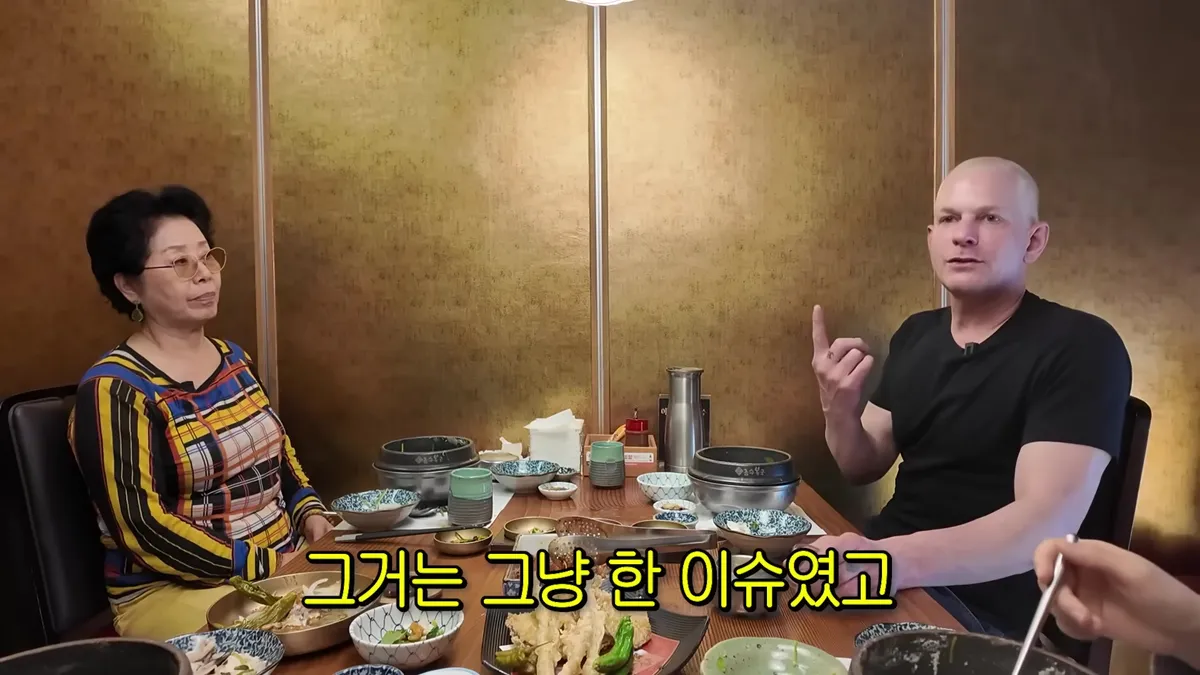
In a released YouTube video, Matthew Douma looked back on the time when he and his Korean wife were registering their marriage. He said that before the seal was stamped, his wife was asked why she had not married a Korean man. After hearing this, Sunwoo Yong Nyeo responded that marriage is the choice of the people involved and questioned why anyone would interfere. Later in the video, Matthew summarized his own view by saying, in effect, that he sees people not as Korean people or foreign people, but simply as people.
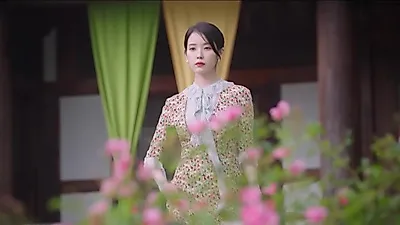
The core of the public remarks is not Jeon Somi herself, but the threshold her family encountered. This is not a controversy about Jeon Somi's individual activities. Born to a Canadian-Dutch father and a Korean mother, Jeon Somi became one of the most natural examples of a multicultural image within K-pop through her time with I.O.I and her later solo career. For that reason, the remarks should not be consumed merely as a celebrity family anecdote. They function more as a reminder of a social barrier that global K-pop carried from its starting point.
What is important is that Matthew Douma did not expand the story into a present-day claim of victimhood. He explained it in the context of the times, saying that such things were common then, and added that much has changed now. That balance matters in coverage of the issue. The unfair question from the past should be identified clearly, but if unverified claims of additional discrimination or speculation about private family emotions are added, the credibility of the issue collapses.
What appears in the official video is less an expose than the texture of a conversation. Rather than a sensational disclosure, the exchange reads like a recollection shared over a meal. In the Busan day-trip content, Matthew Douma talks in sequence about how taekwondo led him to Korea, how he approached his children's education, and stories about his family. The marriage registration anecdote comes within that flow. The focus of the article, therefore, should not be a so-called shocking remark, but how an outdated standard in Korean society toward international marriage and multicultural families remained in one family's memory.
The frame of the video also shows the atmosphere of the conversation. Matthew Douma sits across from Sunwoo Yong Nyeo, explaining with gestures, while the production team and cast members show surprise and sympathy. At the same time, the video does not lead into a legal complaint or an accusation against a specific institution. For that reason, it is more accurate for coverage to address the industry-level question raised by the public remarks, instead of definitively blaming a particular individual or organization.
A multicultural image is not decoration for K-pop; it is an operating standard. K-pop already treats multinational members, English-language singles, overseas tours, and global fan platforms as basic conditions. Jeon Somi's career is connected to that same flow. Through Mnet audition programming, project group activities, and later solo work, she established herself as an artist who uses both Korean-language and English-speaking sensibilities. The current stage, where such a star can be accepted naturally, contrasts with the closed gaze experienced by an earlier family generation.
But contrast alone is not enough. The industry often uses an artist's multicultural background as a concept and as a marker of global accessibility. If that is the case, the same level of respect should also be institutionalized in fan communication, broadcast subtitles, interview questions, and online comment management. If multicultural identity can be used in promotional language, there must also be standards that prevent that background from being reduced to ridicule or private curiosity.
The reason this issue matters in the global Hallyu (Korean Wave) context is that fandom sensitivity has changed. Overseas fans see K-pop not only as music, but also as content that includes cultural attitudes. An artist's country of origin, family background, and the way a broadcast asks about and captions that background are quickly translated and shared. The speed with which a single conversation travels beyond its original region is different from the past.
This change is a burden, but it is also an opportunity. If K-pop can show a more mature way of embracing artists from diverse backgrounds, global fandom can feel a level of trust deeper than simple market expansion. Conversely, if multicultural backgrounds are consumed only as exotic devices, fans notice the imbalance immediately. That is also the meaning left by Matthew Douma's remarks. The moment a family's old threshold is spoken of again, the present industry is tested on how much it has lowered that threshold.
The next checkpoint is the way questions are asked. The standard for judging what follows is not whether another new disclosure emerges. What matters more is which questions broadcasts and interviews choose first when they deal with multicultural families, foreign parents, and mixed-heritage artists. Even when asking about family background, an approach driven by curiosity and an approach connected to career context produce different results.
Jeon Somi's family story is an uncomfortable footnote to K-pop's global success story. If diversity on stage has become natural, the language used to explain that diversity must also change. The next checkpoint is clear: beyond stating that global K-pop has stars from diverse backgrounds, the industry must show, within actual content, standards for respectful questioning, editing, and fandom management that honor those backgrounds.
Related articles

Kwon Eunbi Expands Summer Queen Image Through Bali Vlog