Funky Freaky Freaks: Why Festival Awards Alone May Not Decide Its Theatrical Run
Ahead of its June 17 release, Funky Freaky Freaks turns festival honors, genre volatility, and newcomer energy into its key theatrical test.
The film Funky Freaky Freaks is scheduled to open in theaters on June 17, 2026. This article looks beyond the simple fact of its coming release and examines what else an independent film needs for festival recognition to translate into box-office momentum. The available release information, the official program note from the Busan International Film Festival, and the texture of the official trailer all point to the same question: not merely whether the film has been praised, but what kind of validation it has already passed through and which viewers it needs to reach first.

The first layer of trust comes from its festival record. The basic confirmed information is clear. Indie Space lists Han Chang-rok as director, Joo Min-hyung, Baek Ji-hye, Jung Soo-hyun, and Shin Jun-hang as cast members, Atnine Film as distributor, and a rating of 15 and over. The same release information introduces the film as a winner of the Special Jury Award in the Busan Award section at the 30th Busan International Film Festival and the New Choice Award at the 51st Seoul Independent Film Festival.
That matters more than it might in an ordinary release article. For an independent feature, the audience’s first judgment often depends less on star casting or large-scale marketing than on where the film was first tested and recognized. In that sense, the Busan Award and Seoul Independent Film Festival prizes are not vague promotional claims about quality. They are the most concrete trust signals the film can offer viewers before it reaches regular theaters.
Still, awards alone do not explain the character of Funky Freaky Freaks. The Busan International Film Festival program note explains that the original Korean title is drawn from the first syllables of three chapter-like titles that appear midway through the film: impulse, collision, and shock. Its genre labels also refuse a single lane, placing crime and violence alongside psychological mystery thriller elements, comedy, and satire.
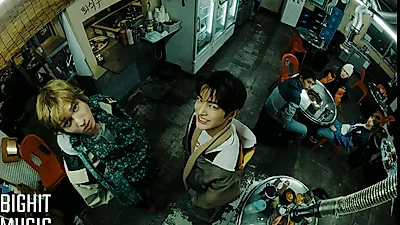
The official trailer foregrounds that mixture. Classrooms, mobile-phone screens, rough close-ups, and intense colors cut quickly against one another. What begins with emotions that could resemble a familiar teen triangle does not remain in a playful register. The central viewing point is how convincingly the film lets the lightness suggested by the word teen collide in the same frame with the anxiety of a crime drama.
For that reason, the theatrical variable for Funky Freaky Freaks is not simply the provocative nature of its subject matter. The film needs viewers to read the characters’ recklessness not as empty excess, but as a process in which teenage lack, the hunger for recognition, and a violent world become entangled. In the early stage of release, the trailer, reviews, and audience word of mouth will matter because they can lower the interpretive threshold for that reading.
The publicly confirmed festival record currently breaks down into two awards, one domestic festival invitation, and two overseas festival invitations. Indie Space lists the Muju Film Festival, the Hong Kong International Film Festival, and the Taipei Film Festival in addition to the Busan International Film Festival and Seoul Independent Film Festival awards. KinoLights’ title page and the Busan International Film Festival archive also support the film’s 87-minute running time, 2025 production year, and Korean origin.
Those numbers do not guarantee commercial success. They do, however, give viewers a starting point: this is not simply a film they are hearing about for the first time, but a film that has moved through the festival circuit before arriving in theaters. The overseas invitations in particular can be read as a signal that its emotional register is not confined only to the grammar of Korean youth films.
From the casting side as well, Funky Freaky Freaks looks closer to a film that must compete through the energy of its characters than through star-centered publicity. Joo Min-hyung’s Yong-gi, Baek Ji-hye’s Ji-sook, Jung Soo-hyun’s Kim Woo-joo, and Shin Jun-hang’s Dumbo are tied together by keywords such as lack, gaze, masks, and impulse. The structure appears less like the growth story of a single protagonist than a drama led by the sound of relationships cracking.
The Korea National University of Arts newsroom described director Han Chang-rok’s work as cinema that looks at society through the reality of contemporary teenagers. It also noted that his previous short film Piper was invited to events including the International Film Festival Rotterdam, the New York Asian Film Festival, and the Jeonju International Film Festival. That context encourages Funky Freaky Freaks to be seen not as a sudden attention-grabbing title, but as the feature-length expansion of concerns already present in Han’s short-form work.
The post-release test is straightforward. In the first week, cinephile audiences who actively seek out festival winners will be central. After that, the dividing line will be how persuasively the trailer’s hard rhythm and the actors’ unfamiliar faces connect with general viewers. The 87-minute running time may lower the barrier to entry, but if the density of the genre mixture feels loose, reactions could split quickly within that short span.
Funky Freaky Freaks has too much confirmable context to be consumed only through the phrase festival-acclaimed. The Special Jury Award in the Busan Award section, the New Choice Award at the Seoul Independent Film Festival, the June 17 release date, Atnine Film’s distribution, and the official trailer’s rough teen crime-drama texture all form one line. For that line to gain force in theaters, audiences will need to grasp the characters’ emotional trajectory before they simply register the awards record.
The final checkpoints before release are the theater placement during opening week and the direction of first audience reactions. The survival of Funky Freaky Freaks in theaters will depend less on the word provocative than on whether viewers accept the structure that moves from impulse to collision and then to shock.