The Show Chart Revamp Faces Its First Test on June 2
SBS Life's The Show returns on June 2 with global streaming, social engagement, and vote data under scrutiny.
SBS Life music program The Show (THE SHOW) is set to return with its 394th episode at 6 p.m. on June 2, 2026. On the surface, the schedule reads like a comeback after a half-year broadcast break. The substance of the relaunch, however, lies in how the program is redesigning both its chart and distribution structure around global fandom data.
The question now facing the K-pop music-show system is sharper than a routine programming update. A weekly No. 1 trophy can be understood either as the result of a domestic broadcast format or as an indicator that explains how fandoms around the world actually behave. The revamped The Show is putting that question on the table.
The angle of this story is clear. The Show's revamp is not important simply because it will be transmitted to global viewers at the same time. The more important issue is how fandom behavior will be converted into scores, how those standards will be disclosed, and whether fans can understand the result. The stage opens on June 2, but the real competition for credibility begins earlier, with the chart point allocation and voting operation rules that are expected to be made public before the broadcast.
The first thing to examine is not the return itself, but what the chart will measure. According to the details that have been released, the new season will reflect streaming data from global music services in its chart. It will also introduce a Fandom Engagement Score based on analysis of activity across social platforms including Instagram, YouTube, and TikTok.
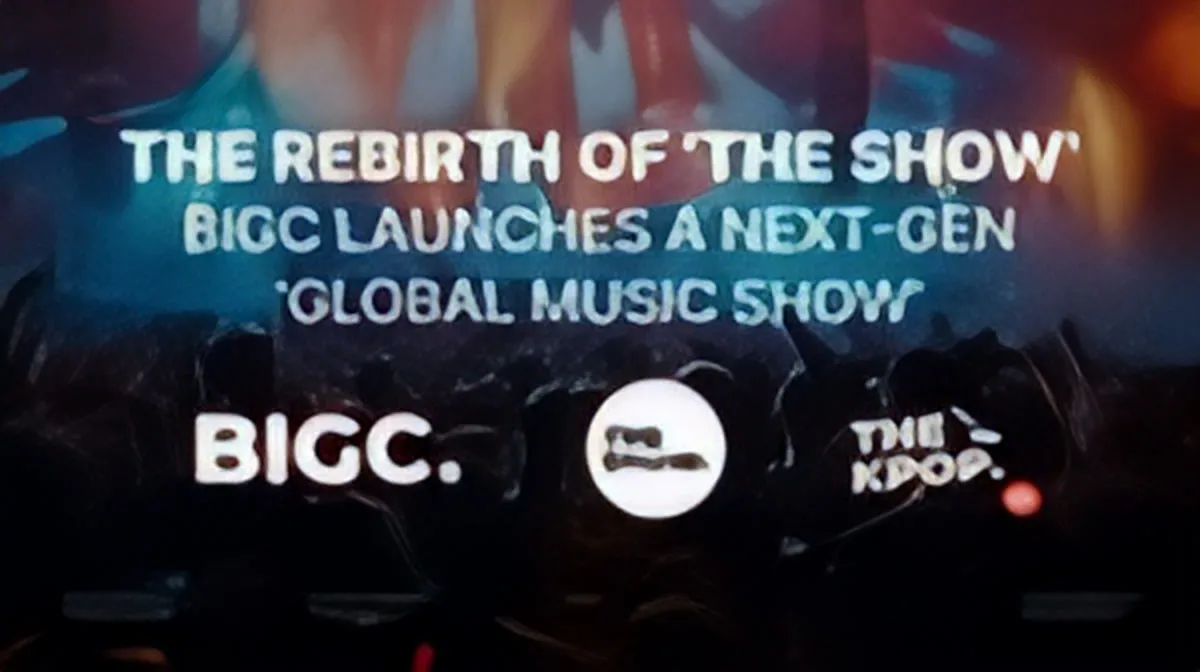
Voting will be divided into pre-voting, real-time voting, and after-voting, all conducted through the BIGC app and web platform. Pre-voting begins on May 29. Domestic broadcasting will be handled by SBS Life, while the program's global points of contact will expand through BIGC ON, THE K-POP YouTube channel, and TikTok Live.
This changes what a music-show chart rewards. Traditional charts have combined music releases, album sales, broadcast points, and voting. The new The Show is trying to pull in a broader set of platforms where fandoms actually move. Overseas fans, in particular, often show their presence less through watching a Korean television broadcast in real time and more through clip viewing, live voting, SNS circulation, and repeat viewing on YouTube.
Declaring that those behaviors will be placed inside the scoring system is meaningful. But fairness does not follow automatically from the declaration. The first point to watch, therefore, is not the adjective global. The core issues are which streaming services will be reflected, how duplicate counting of social activity will be prevented, and whether the method for acquiring voting rights gives excessive advantage to users in particular regions or to users of a particular app. The wider a chart becomes, the more precisely it has to explain itself.
BIGC's data scale is both a strength and something that needs verification. In official materials distributed on May 22, BIGC described the new The Show as a technology-based global music show. The same materials cited 3.6 million global members across 232 countries and 1.3 billion artist and fandom data points.
Earlier, in materials announced on May 11 about the acquisition of Blip and K-Pop Radar, BIGC also stated that K-Pop Radar had handled more than 800 K-pop artist teams and more than 1.1 billion IP data points. This is closer to a transfer of data infrastructure than a simple production collaboration.
Confirmed figures from BIGC's official press releases and publicly available channel indicators include 232 countries, 3.6 million members, 1.3 billion fandom data points, more than 800 K-Pop Radar analysis targets, and approximately 2.9 million subscribers for THE K-POP. The basis indicators for The Show's global revamp are as follows: 1.3 billion fandom data points, more than 1.1 billion K-Pop Radar IP data points, 3.6 million global members, service reach across 232 countries, and approximately 2.9 million THE K-POP subscribers. The sources are BIGC official press materials and public THE K-POP channel indicators. Because the units differ, these numbers should not be read as a bar-by-bar scale comparison, but as evidence of the data foundations being presented for the revamp.
The numbers are large. In a music-show chart, however, what matters more than the size of the numbers is whether the calculation formula can be explained. The existence of 1.3 billion data points does not automatically make a given week's No. 1 result persuasive. Fans need to know the data sources, reflection ratios, filters for abnormal activity, and platform-by-platform weights before they can accept a result as credible. BIGC's data assets can become a competitive advantage for The Show, but they also create pressure for a higher level of transparency.
The expansion of distribution is aimed more at viewing time than at viewership rating alone. One newly confirmed point in the official materials is the distribution method. BIGC said it would expand the program not only through simultaneous TikTok Live transmission but also through global FAST channels in collaboration with NEW ID. FAST means free ad-supported streaming television. That direction reflects the judgment that it has become difficult to evaluate a music show's performance through a single domestic live-broadcast viewership rating.
THE K-POP YouTube channel is also important within this structure. Related reports and public channel statistics describe the channel as having approximately 2.9 million subscribers. Subscriber count, however, represents potential reach. It does not guarantee actual viewing duration or conversion into voting participation. As a music show expands across platforms, stage-video views, live concurrent access, voting participation, and short-form spread become separate indicators. The challenge for the new The Show is the distortion that can occur when those different indicators are compressed into one ranking line.
The new segment Fan Popty (FAN POPTY) sits in the same context. BIGC has previewed a format centered on one comeback artist team, covering the story of the album and behind-the-scenes stage moments. The segment will be released first through the BIGC app and web platform and then meet fans through THE K-POP channel. If only the stage is released, attention disperses into clip consumption. If comeback narrative and participatory content are attached to that stage, fans have more reason to stay inside the platform. The music show is trying to become not just a broadcast schedule slot, but an entry point into the fandom journey.
The meaning of The Show as a gateway for rookies also has to be recalculated. The Show has continued as a music program since its first broadcast in 2012. Related reports have noted that BTS, NCT DREAM, and ENHYPEN are among the acts that experienced their first music-show No. 1 on this stage. Because of that history, a trophy from The Show has been more than a weekly scorecard. Compared with major flagship music programs from large broadcasters, it has offered a lower entry barrier and given rising teams a stage where they could create their first official record.
If a global participatory chart is introduced, the character of that gateway changes. For teams whose overseas streaming and social spread move quickly, the opportunity can become wider. For rookies who are less familiar with app voting and platform-activity design, the burden can become heavier. The moment a music-show appearance changes from showing a stage to designing fan behavior before and after that stage, an agency's digital operating capability also becomes part of the ranking competition.
For K-pop readers, the information they need is not simply the first broadcast date. They need to check which teams become candidates on the June 2 stage, how much pre-voting and real-time voting are actually reflected in the final result, and how far global streaming data is included. Only when those three points are disclosed can the new phrase global fandom score move beyond marketing language and become chart language.
The next checkpoints are the disclosure of the point allocation and the first No. 1 result. Some variables have not yet been finalized. BIGC's official materials said the detailed scoring standard for selecting the weekly No. 1 would be disclosed later through the official website. At this stage, then, it is not possible to conclude that the new The Show chart is more fair. Saying that global data will be included and becoming a verifiable chart are two different things.
The first broadcast on June 2, and the scoring table expected shortly before it, will serve as the first test paper for this revamp. If candidate selection, voting accessibility, and the social-score calculation method are disclosed in language fans can accept, The Show could become more than a return after half a year. It could become a case study in how a music-show chart adapts to the era of global fandom. If the point allocation remains vague, however, the enormous data scale will become not a basis for trust but material for dispute. The more important question is not who becomes the next No. 1, but how that No. 1 can be explained.
Related articles