Jang Dong-min's Health Confession on 'Three Perspectives' Explores How to Verify Health Entertainment
SBS 'Three Perspectives' uses Jang Dong-min's experience with cerebrovascular risks to analyze how health-focused variety shows can provide verified medical information.
Jang Dong-min's confession takes center stage in the broadcast of SBS 'Three Perspectives' on June 7 at 8:35 AM. This article analyzes whether Jang Dong-min's confession is used as provocative medical consumption or if it serves as a tool to analyze what verification mechanisms are needed for health information entertainment to transform personal narratives into public information.
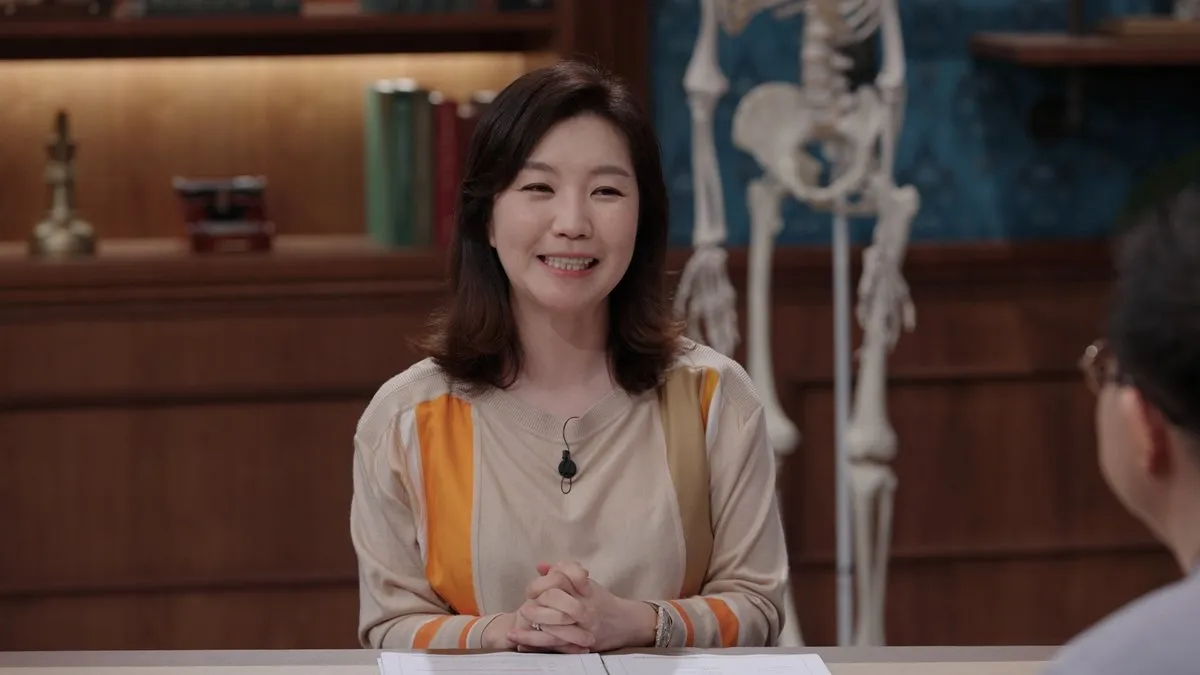
The weaknesses of the initial draft were clear. It concluded that nosebleeds and rising blood pressure were precursors to specific diseases and generalized nutrient intake as a preventive solution. The final version separates statements confirmed on air, SBS programming information, and stroke risk factors and emergency response standards.
Why personal confession is the starting point Jang Dong-min explains his experience on air using the expression, "I returned alive from the threshold of death." He follows this with a confession that the moment he bent his head to wash his face, a large nosebleed occurred, and at the time, his weight reached 100kg, and he had lightly overlooked rising blood pressure. In variety shows, such scenes serve as a powerful introduction.
However, the power of a scene does not equate to a medical conclusion. One cannot judge cerebrovascular disease based solely on a nosebleed, and the personal experiences presented on air are recollections of the performer, not diagnostic records. Therefore, the core of this episode is not about 'scary symptoms,' but about how to convey the necessity of lifestyle checks so as not to neglect abnormal signals from the body.
At this point, 'Three Perspectives' differs from general talk shows. Instead of consuming the performer's confession as laughter or surprise, it connects it to expert panel explanations and health information segments. What viewers should gain is not the details of Jang Dong-min's private medical history, but the criteria for how to act in the face of warning signals.
The decisive factor for health information entertainment is verification On air, internal medicine specialist Han Seong-min explains that time delay is fatal when cerebrovascular vessels are blocked. Stroke guidance from organizations related to the American Heart Association also suggests that, on average, about 1,900,000 brain cells can be damaged every 1 minute when treatment is delayed. The function of these numbers is not to increase fear, but to concisely show why the judgment of 'let's just watch and see' can be dangerous.
However, when health entertainment deals with figures, it must also state the limitations. The US CDC summarizes factors that increase stroke risk as hypertension, obesity, diabetes, heart disease, smoking, and lack of exercise. While the weight and blood pressure mentioned by Jang Dong-min can be understood within that large category, one cannot calculate an individual's actual risk level from a single broadcast scene.
Therefore, the informational value of this episode lies not in a single prescription like 'you just need to eat Omega-3 and Omega-6,' but in the basic principle that one must regularly check blood pressure, weight, and lifestyle habits and connect with medical staff if abnormal symptoms occur. The moment health information entertainment gains trust is when it leaves viewers with actionable standards they can check immediately, rather than product names or secret methods.
A clearer change when viewed as an entertainment format 'Three Perspectives' is a health information-type program scheduled for Sunday at 8:35 AM according to the official SBS program page. Looking at the replay list, lifestyle health topics that middle-aged viewers might be interested in, such as visceral fat, collagen, dementia, joints, and inflammation, are repeatedly placed. This cerebrovascular episode follows a similar flow.
The important difference lies in the method of utilizing performers. Past health information programs focused on expert lectures and case reenactments, but recent formats lower the barrier to entry by having broadcasters talk about their own physical condition. Jang Dong-min's confession functions as that device. When a familiar face speaks of warning signals, viewers accept the information more easily, but at the same time, the program must avoid producing exaggerated fear.
If this balance is broken, health entertainment is immediately read as advertising information or disease-fear content. Conversely, if personal cases, professional explanations, and official emergency standards are separated within one screen, the genre becomes useful. The point at which this episode will be evaluated is exactly that separation. Jang Dong-min's words are the starting point, and the viewers' judgment criteria should come from verified medical information and the broadcast's editing method.
Next points for viewers to check There are three next checkpoints for the broadcast. First, does it treat Jang Dong-min's experience as a case of risk awareness rather than concluding it with a specific disease name? Second, does it show management items like blood pressure, weight, and lifestyle habits specifically, without packaging certain nutrients as a panacea? Third, does it clearly distinguish signals that require immediate emergency help, such as facial drooping, loss of arm strength, slurred speech, or sudden vision/balance abnormalities?
If it passes these criteria, the Jang Dong-min episode of 'Three Perspectives' goes beyond a simple confession teaser. The job of health information entertainment is not to hold onto anxiety for a long time, but to make viewers take action after the broadcast ends, such as checking their blood pressure, memorizing warning signals, and connecting to medical institutions when necessary.
Related articles