Lee Seung Gi’s Three-Minute Sellout Shows the Stakes of His Concert Return
Lee Seung Gi’s 2026 solo concert sold out all seats in three minutes, offering a clear measure of enduring demand after a 13-year gap.
Lee Seung Gi’s 2026 solo concert, Giseungjeon: Rak, sold out every seat for all scheduled performances just three minutes after ticketing opened at 6 p.m. on June 4. The result matters not simply as a notice of strong sales, but because it puts a number on the music demand still attached to Lee Seung Gi as he prepares for his first full solo concert in about 13 years, since 2013.
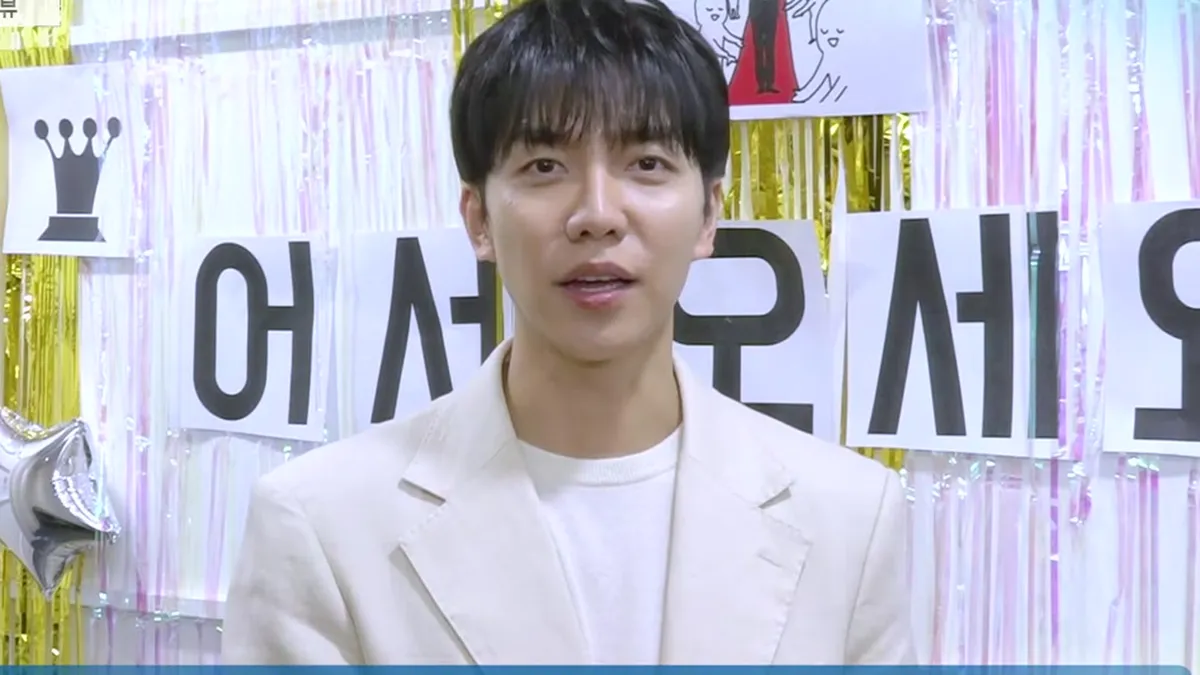
According to the official NOL Ticket booking page, the concerts are scheduled for October 24 and 25, 2026, at Blue Square Woori WON Banking Hall in Seoul. The listed running time is 120 minutes, admission is open to elementary school students and older, and tickets were priced at 154,000 won for all seats. Taken together, the rapid sellout and the confirmed schedule make this performance less a simple “long-awaited comeback” than Lee Seung Gi’s first real test of whether he can again be evaluated as a concert-format artist.
The 13-year gap is being closed by a full concert, not a fan-meeting. In recent years, Lee met audiences through the 2023 Asia tour The Dreamer’s Dream - Chapter2 and the 2024 20th-anniversary fan-meeting 7300+. But a fan-meeting and a formal solo concert demand different kinds of capacity in the market. A fan-meeting places greater weight on updates, closeness and interaction, while a concert must prove, all at once, a set list of roughly two hours, live stability, stage transitions and fresh interpretations of signature songs.
That is why this sellout cannot be explained only by the feeling that fans were happy to see him after a long time. A 13-year interval can weaken fandom loyalty, but it can also become a period in which signature songs shared across several generations accumulate greater value. In Lee Seung Gi’s case, the first signal points closer to the latter.
The official schedule also shows the density of the return. NOL Ticket classifies the event as a ballad concert and places it across two weekend performances, at 6 p.m. on Saturday and 4 p.m. on Sunday. A two-day weekend structure is easy for family audiences and longtime fans to move around. The exclusive ticket sale and the limit of four tickets per person for each performance can also be read as devices for managing booking concentration when early demand rushes in.
The shift in Lee Seung Gi’s performance contact points from 2013 to 2026 forms a clear timeline: a gap in full solo concerts after 2013, an Asia tour in 2023, a 20th-anniversary fan-meeting in 2024, and then a formal solo concert in 2026. The sequence moves from a 2013 full concert to the 2023 Asia tour, the 2024 anniversary fan-meeting and the 2026 full concert, with the key point being the move back from fan-meeting to concert. More important than the length of the absence is the change in performance format.
As that timeline suggests, the central point is that the audience contact built in 2023 and 2024 has led into a formal concert in 2026. Rather than pushing straight into a major performance after a long absence, Lee widened his audience contact again through a tour and a fan-meeting, then confirmed demand for a concert. From a career-management perspective, that order is stable.
His catalog of signature songs functions as the set list’s safety net. The previewed repertoire for this concert includes songs from different periods and moods, such as “Because You’re My Woman,” “Delete,” “Return,” “Smile Boy” and “Will You Marry Me.” This list does not target only the memories of one generation. It places together direct ballads from the early phase of his debut era, a bright song connected with popular variety entertainment, and a track repeatedly consumed in daily life like a wedding congratulatory song.
That is the substance behind the ticket power. Rather than relying on the buzz of a single current release, broader demand is being generated by audiences who already know these songs and want to hear them again in person. In a 120-minute concert in particular, the number of hit songs an artist holds directly affects the stability of the overall structure. If new arrangements or a band sound are added, the concert can move beyond a retrospective stage and reintroduce “Lee Seung Gi the vocalist of now.”
Recent results on music entertainment programs have also changed expectations for the concert. His win on the composer Kim Do-hoon episode of KBS2’s Immortal Songs and his appearance as the original singer on JTBC’s Hidden Singer 8 are difficult to leave out when interpreting this sellout. The Immortal Songs stage shown in official video focused less on flashy performance than on vocal breathing and emotional line. The core requirement of a concert ultimately points in the same direction.
After the sellout, Lee Seung Gi wrote on his personal social media account, “Sold out, really? Thank you so much. I’ll do my best to prepare.” The sentence is closer to a checkpoint than a promotional line. The sales are already over, and the remaining judgment will depend on how he rearranges his signature songs in sequence and tone at the concert hall in October.
The next variable is quality after the sellout. A full sellout is the starting line. What the audience expects is not simply a recall of memories, but a clear answer to how Lee Seung Gi’s voice and stage language, changed over the past 13 years, will be organized inside his signature songs. There are three points to watch at Blue Square Woori WON Banking Hall on October 24 and 25. First, whether a ballad-centered concert can maintain density for 120 minutes. Second, whether the intimacy of fan-meetings avoids clashing with the completeness of a concert. Third, whether the vocal presence confirmed on entertainment programs continues as sustained power in an actual solo performance.
If those three conditions are met, this sellout will become more than a one-off box-office result; it will become a basis for his next musical activities. That is why the meaning of the three-minute sellout lies less in the speed of the sale itself than in the signal that Lee Seung Gi has returned as a name that can once again be tested in the concert market.
Related articles