Yoo Seung-jun Video Signals a Shift in Message Ahead of July Appeal Hearing
Ahead of a July 3 appeal hearing in his third visa lawsuit, Yoo Seung-jun’s June 4 YouTube video shifts tone without ending the legal fight.
Yoo Seung-jun, also known as Steve Seung Jun Yoo, used an official YouTube video released on June 4, 2026, to deliver what appeared to be a more restrained message about his long-running bid to enter South Korea. The central point is not whether he has emotionally given up. It is that, ahead of the July 3 appeal hearing in his third visa lawsuit, the way he explains himself to the public has changed. After 24 years of repeated dispute, the question is moving away from a simple plea of wanting to return and toward a harder issue: how he should accept the gap between legal judgment and public sentiment.
What changed in the official video was the tone, not necessarily the goal
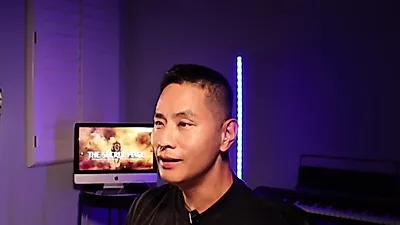
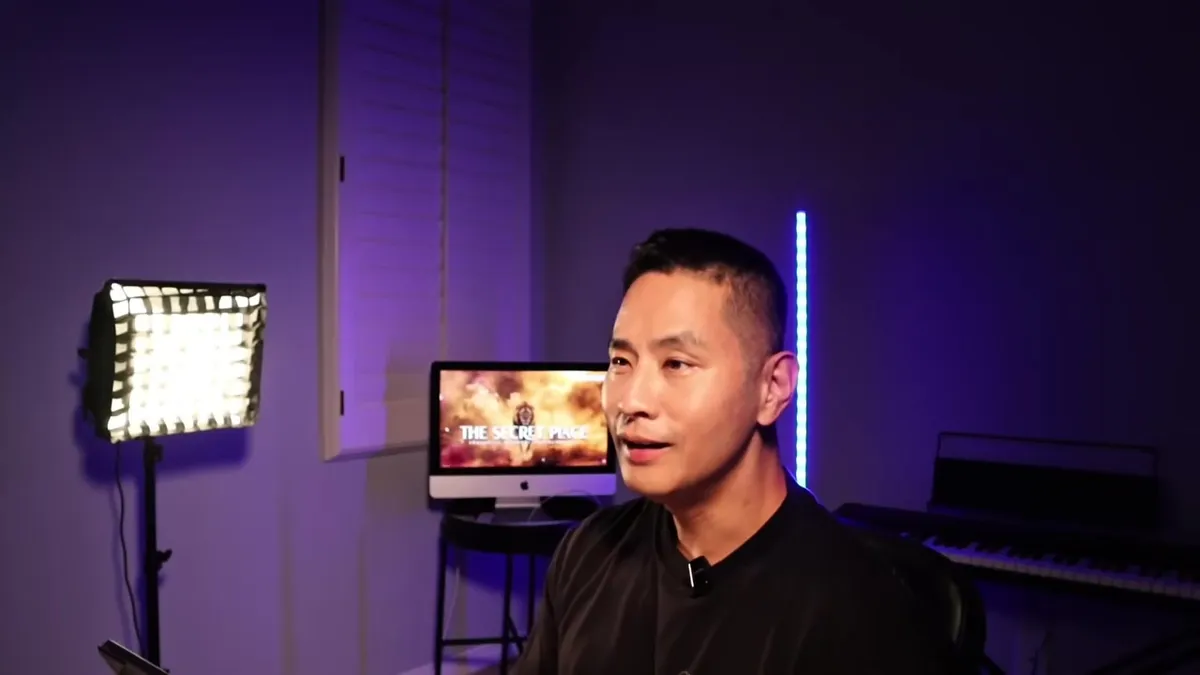
The title of the video was “I have done enough. Now I am going to stop.” The description released with it was built around several ideas: the passage of 24 years, his past belief that entering South Korea was necessary in order to correct misunderstandings and rumors, and the possibility that it may now be time to focus on the people beside him and on his present life. On the video screen, he continues at length in a studio-style question-and-answer setup. Rather than pushing through another apology or another rebuttal, he organizes his reasons for having continued to speak about South Korea through the language of personal identity.
That is why the video is difficult to read as a formal declaration that he is abandoning the legal fight. The center of the video description and his remarks is closer to psychological fatigue and a changed public explanation strategy than to the end of a procedure. If the phrase “final message” were used too literally, readers could misunderstand the situation as if the appeal had already concluded. A more accurate reading is that the courtroom dispute remains, while the center of gravity in his attempt to persuade the public has been lowered.
Why the 24-year controversy split the courtroom from public opinion
Yoo Seung-jun gained wide recognition as a dance singer after his 1997 debut. In 2002, after acquiring U.S. citizenship, he became the focus of controversy over alleged avoidance of South Korea’s mandatory military service obligation. What followed was an entry restriction and repeated refusal to issue an overseas Korean, or F-4, visa. As a result, the matter moved beyond the boundaries of entertainment news and became an administrative litigation issue. It may look like the question of whether a pop culture figure can return, but in practice it has become a case where social emotion about military duty collides with the discretionary authority of immigration administration.
The important point is that a court ruling does not automatically equal public acceptance. In earlier litigation, South Korea’s Supreme Court previously issued a decision favorable to Yoo Seung-jun, but visa issuance was refused again, and the legal battle repeated itself. That pattern shows that, in K-entertainment, a “return” is not simply a question of appearing on a stage or on a broadcast program. Military service issues in particular are tied to a broader generational memory, wider than a typical fandom dispute, so public opinion is not automatically reset simply because time has passed.
The appeal schedule created a second variable
The next confirmed procedure is the first hearing in the appeal of his third administrative lawsuit, scheduled for July 3, 2026, at the Seoul High Court. This lawsuit sits on a timeline that includes the LA Consulate General’s renewed refusal to issue a visa in June 2024, the filing of a third lawsuit in September of the same year, Yoo Seung-jun’s win as plaintiff at the first trial in August 2025, and the subsequent appeal. For that reason, the June 4 video should not be viewed as a reaction after a ruling. It should be understood within the timetable of a public message released roughly one month before the second-instance hearing.
Key timeline in the Yoo Seung-jun entry controversy
The main procedures run from the 2002 citizenship controversy to the first appeal hearing scheduled for July 2026. In 2002, the citizenship acquisition controversy and entry restriction began. In 2015, he applied for an F-4 visa. In 2023, he won at the Supreme Court in the second lawsuit. In 2024, his visa was refused again and a third lawsuit was filed. In 2025, he won the first trial in the third lawsuit. In July 2026, the first appeal hearing is scheduled. This timeline is based on the official video release date and court schedules confirmed in public reports.
What the timeline shows is simple. This case is not structured to end with one apology, one ruling, or one video. The court examines the legality and proportionality of administrative action, while the public remembers the loss of trust that has accumulated since 2002. If the latest video has significance, it lies in the fact that Yoo Seung-jun appeared to acknowledge more clearly that those two layers remain separate.
This is not just celebrity news, but a failed return narrative
Yoo Seung-jun’s case differs from the usual formula for a controversial celebrity’s return. The common path of stopping activities, spending time in reflection, and then being judged again through a work, stage, or performance is hard to apply here. The starting point of the controversy is tied to legal and social obligations outside his artistic work. That is why his message has never been able to shift cleanly into an entertainment event such as a new album, a broadcast comeback, or a concert schedule. Each time, it returns to the same question: can he enter South Korea?
This is where the latest video has informational value. He did not choose a stronger rebuttal. While again mentioning existing points such as taxes, rumors, and affection for South Korea, he also showed a degree of distancing, saying in effect that there is no great meaning in continuing in the same way. That language is closer to an acknowledgment that public persuasion has failed. At the same time, it has not yet been confirmed whether this expression will lead to any real change in legal strategy. That is why the article should not state as fact that he has “given up” or that the matter has “ended.”
The next checkpoint is procedure, not emotion
There are three standards by which the next phase should be judged. First, whether the July 3 appeal hearing maintains the proportionality reasoning from the 2025 first-instance ruling. Second, whether, even after a court judgment, the practical process of visa issuance runs into the same barrier again. Third, whether Yoo Seung-jun himself, in keeping with the tone of this video, stops placing the South Korea entry issue at the front of his public activities.
For readers of popular culture, the reason this case still matters is not limited to whether one individual returns to South Korea. It is a long-running example of how differently legal judgment and the recovery of public trust can move when public confidence has collapsed in K-entertainment. When foreign nationality, mandatory military service, and renewed domestic activity appear on the same screen, platform-based public opinion often reaches a conclusion faster than legal language does. The point to watch, therefore, is not a simple debate for or against Yoo Seung-jun. It is whether a legal victory can satisfy the practical cultural conditions for a return. The June 4 video is not the ending. It is a signal ahead of the next hearing. The conclusion will be confirmed not by the sentences in the video, but by the July appeal and by what actually follows afterward.
Related articles
Park Won-bin's Teaching Career Sets a Standard for Life After Variety TV
How Bbaek Ga's JYP Anecdote Reframes a Career Turning Point

Kwon Eunbi Expands Summer Queen Image Through Bali Vlog
Jeon Somi's Family Story Reveals K-pop's Inclusion Standard