What Kim Mu-yeol’s Netflix Talk Reveals About the Release Variables for Teach You a Lesson
Kim Mu-yeol’s pre-release Netflix Korea talk linked his parenting anecdotes to the action image and adaptation risks facing Teach You a Lesson.
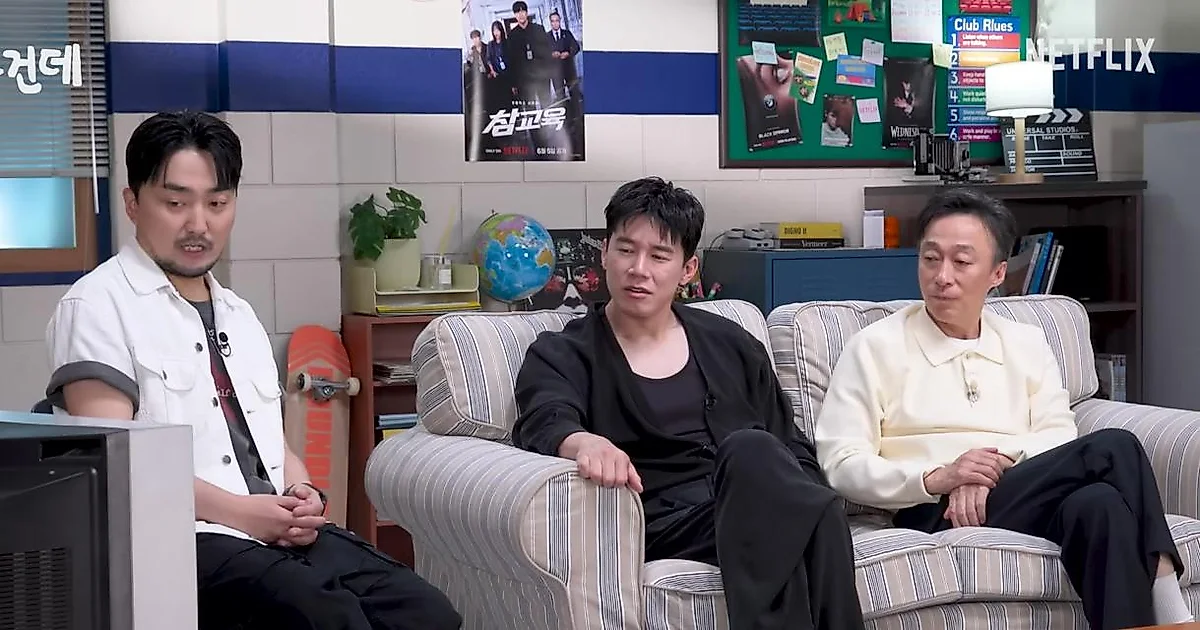
Kim Mu-yeol did appear on Netflix Korea’s official YouTube content, “We Did Come to Promote It,” to promote his new series Teach You a Lesson, and he also shared an update on parenting. The important point, however, is not the private confession itself. It is that a 35-minute talk released one day before the show’s premiere placed two images side by side: the actor’s hard-edged action persona and the everyday face of someone living through ordinary fatigue.
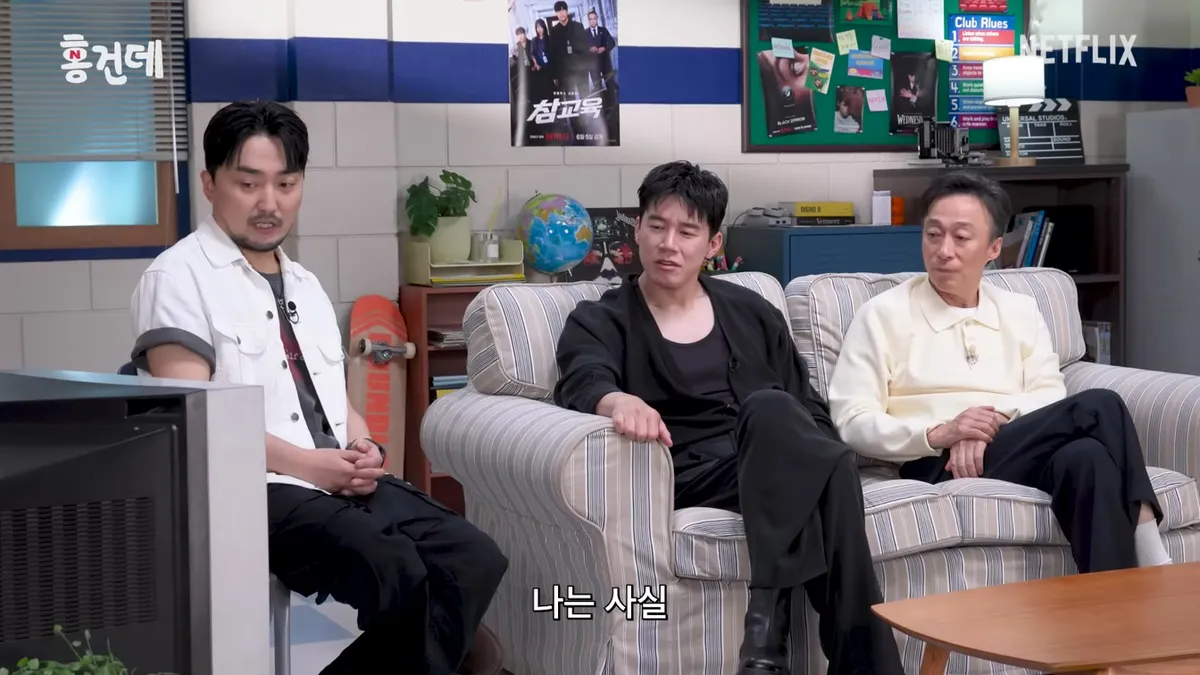
Kim’s remarks are less a simple personal update than a clue to Netflix’s pre-release promotional strategy. The official video description clearly sets out the June 4 upload date, the June 5 release date, the joint appearance by Kim Mu-yeol and Lee Sung Min, and chapters introducing the work itself. That is why the talk may look like variety-show banter on the surface, but in practice reads as a promotional device designed to lower the barrier to entry for viewers on the day before release.
The reason a line that began as a joke became a promotional point lies in the opening update segment. Kim said that after finishing filming, he had been resting and taking care of his child. When asked to compare parenting with work, he answered that, judging only by physical exhaustion, parenting was harder. Asked whether parenting was even tougher than action scenes opposite Ma Dong-seok, he responded in the spirit that even “Ma Dong-seok hyung” could not win against parenting. The line is exaggerated variety-show language, but it works because Kim has built up such a strong image as an action actor.
If the discussion stopped there, the article would end as a one-sentence laugh. The more significant point is that Netflix did not let this remark clash with the action-oriented promotion for Teach You a Lesson, but instead connected it smoothly to the series. When an actor who plays intense characters talks about the fatigue of daily life, viewers encounter the actor before they encounter the character. In pre-release promotional content, that sense of familiarity becomes a cushion that can help move a click toward actual viewing.
Netflix’s official page positions Teach You a Lesson as a 2026 release and as a drama rated for mature audiences. Its genre tags include drama, comedy series, action and adventure, Korean dramas based on webtoons, and dramas dealing with social issues. The listed cast includes Kim Mu-yeol, Lee Sung Min, Jin Ki-joo, and Pyo Ji-hoon, while the creators are identified as Hong Jong-chan, Lee Nam-gyu, and Kim Da-hee.
That combination makes the series’ calculation clear. Teach You a Lesson is a social drama about problems in schools, while also putting the cathartic pleasure of brisk action at the front. Keywords repeatedly confirmed in teaser and main-poster coverage, including the Teachers’ Rights Protection Bureau, the side of victims, and a collapsed school, emphasize the speed of justice being carried out. In that sense, Kim Mu-yeol’s talk is not idle chatter outside the work. It is a preparatory breath that makes it easier for viewers to accept the intensity of his character, Na Hwa-jin.
Kim Mu-yeol plays Na Hwa-jin, an inspector from the Teachers’ Rights Protection Bureau. Within the setup, Na is dispatched to troubled schools and drives situations forward, while promotional materials for the series foreground physical energy such as battles against multiple opponents and car chases. For the actor, the task is to make those forceful scenes convincing.
Yet the first doorway chosen by the pre-release talk was not a display of force. Kim’s comments that parenting is hard but happy, his story about dreams of flying and thoughts of skydiving, and the format in which he and Lee Sung Min go through recommended titles and filmographies all present the actor at a lower temperature than the character. That lower temperature matters. Because memories remain of debate around the expressive approach of the original webtoon, the drama version cannot easily persuade viewers through an image of sheer intensity alone.
For that reason, Kim Mu-yeol’s approachable talk can be read not as a promotional extra, but as part of risk management. When a work handles social issues and violent catharsis at the same time, an actor who first secures a human distance gives viewers more room to judge the direction of the message calmly. That is the difference between a simple parenting confession and pre-release content built around a coming series.
The chapter structure in the official video description is also notable. It starts with an update segment in the one-minute range, moves to recommendations and filmographies in the 14-minute range, introduces Teach You a Lesson in the 25-minute range, presents Jin Ki-joo and Pyo Ji-hoon in the 31-minute range, and then shifts to expected highlights in the 33-minute range. The flow gradually moves from private conversation to explanation of the work.
This method overlaps with a trailer-supplement strategy often used in OTT promotion. If a trailer compresses the world and incidents of a series, a YouTube talk helps audiences remember the work through the voices and chemistry of the actors. For a title like Teach You a Lesson, which carries several tags at once, including action, comedy, social issues, and a webtoon origin, genre description alone is not enough to create an initial reason to watch. The conversation between Kim Mu-yeol and Lee Sung Min translates a complicated genre pitch into actor-driven goodwill.
The next checkpoint is the adaptation behind the laughter. After release, Teach You a Lesson cannot rely only on Kim Mu-yeol’s everyday image or his conversational rhythm with Lee Sung Min if it wants to be persuasive. The punishment delivered by the Teachers’ Rights Protection Bureau must not remain mere vicarious satisfaction; it also has to carry the weight of the social-issue drama emphasized on Netflix’s official page.
Kim Mu-yeol’s line that even Ma Dong-seok cannot stand up to parenting can serve as an effective entry point on the day before release. But after June 5, the evaluation of the series moves to different questions. Only when the pleasure of action, the direction of adaptation from the original work, and the balance in its handling of school issues fit together will this talk remain not just a viral moment, but a pre-release text that opens a way to understand the series.
Related articles