K-pop fancams help power YouTube Korea’s 3.5 trillion won year
Korea’s YouTube ecosystem tops 3.5 trillion won in 2025 GDP impact as K-pop, K-drama, beauty and education content fuel 85,000 FTE jobs.
The economic impact of Korea's YouTube ecosystem in 2025 has been measured at more than 3.5 trillion won in GDP contribution and more than 85,000 full-time-equivalent jobs. This is not simply a story about rising view counts. It means that creative activity across idol stage fancams, beauty and fashion videos, mukbang, education, sports, current-affairs channels and more has spread into advertising, sponsorships, merchandise sales, performances and education businesses, forming a job market of its own.
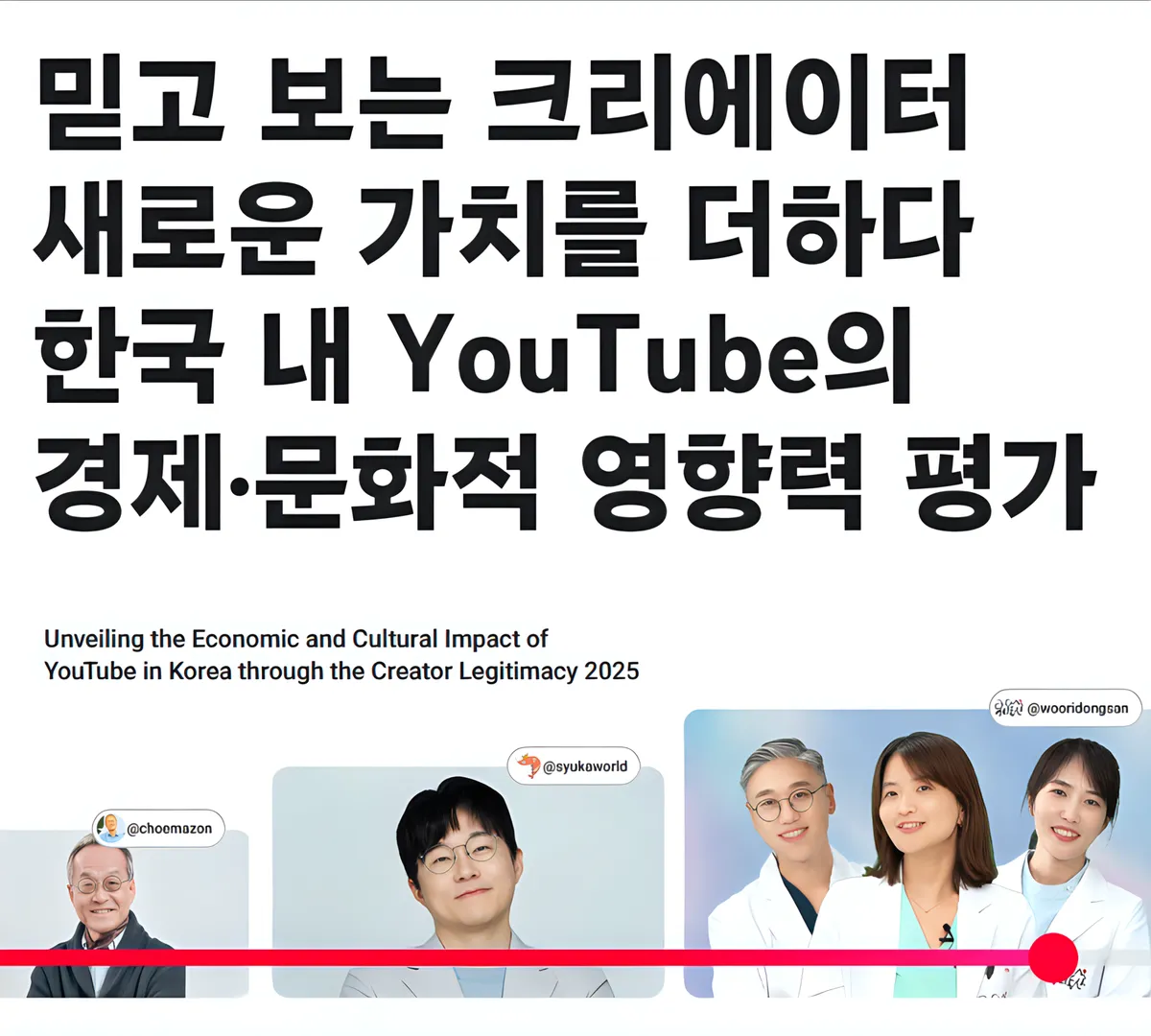
For K-entertainment readers, the importance of those numbers is clear. YouTube is no longer just a place to promote new songs or store clips from variety shows. K-pop choreography now often reaches global fans first through the platform, Korean-style beauty and lifestyle content is tied to overseas consumption, and celebrities and production companies use YouTube as a basic stage for meeting fans outside traditional broadcasting. The structure connecting the videos that fandoms watch with industry revenue has also become more visible.
The 3.5 Trillion Won GDP Figure Is Not YouTube Korea Revenue
The first point to understand when reading these figures is that the GDP contribution does not mean the Korean revenue of YouTube as a single company. The figure is closer to a broader economic impact measure. It includes direct income that creators receive through YouTube, such as advertising revenue, memberships and Super Chat, but it also reflects related activity generated through channels, including sponsorships, product sales, offline events, hiring production staff, buying equipment and outsourcing editing work.
The same caution applies to the figure of 85,000 jobs. The full-time-equivalent jobs cited here are calculated by converting work time into the equivalent of one person working full time. For example, if two people each work half time, that can be counted as one job in this metric. The number therefore does not mean that 85,000 new full-time job postings suddenly appeared. It more closely means that the creative, production and distribution activity around YouTube generated that amount of labor time.
GDP Contribution Rose by 600 Billion Won and Jobs by 10,000 From the Previous Year
The growth becomes clearer in comparison with the previous year. In 2024, Korea's YouTube ecosystem was disclosed as contributing more than 2.9 trillion won to GDP and more than 75,000 full-time-equivalent jobs. Over one year, the GDP contribution increased by more than 600 billion won, while the employment effect grew by more than 10,000 jobs. The center of that growth is less about competition for views alone and more about turning channels into businesses.
Korean channels already have a relatively high share of overseas viewing. As of 2024, about 35 percent of total watch time for Korea-based YouTube channels came from outside Korea, and the number of Korean channels with at least 1 million subscribers exceeded 1,500. K-pop and dramas opened the path first, but the field has widened. Choreography studios, science channels, beauty creators and children's content companies now also earn revenue from overseas viewers. Korean-language content is being consumed across borders in a broader range of formats as translation, subtitles and the Shorts algorithm carry it beyond Korea.
Large-Subscriber Channels Now Operate Like Small Production Companies
The changing YouTube market is difficult to explain only with the old phrase personal broadcasting. When a single channel has writers, filming, editing, thumbnails, translation, advertising sales and product planning, it effectively operates like a small production company. Web variety shows featuring celebrities, channels that explain idol choreography, and brand collaborations by beauty creators all belong to this shift. Unlike the era when broadcasters gathered viewers through programming schedules, the channel itself now owns a fandom and connects that fandom back to business.
This shift brings both pressure and opportunity to the K-entertainment industry. Fans seek out stage clips and behind-the-scenes videos faster than official broadcasts can provide them, and many overseas fans first encounter an artist on YouTube. At the same time, provocative exposes, unverified private-life stories and controversies over advertising disclosure weaken trust in the platform. As strong channels increase, the market grows; if bad practices repeat, fans and advertisers can turn away at the same time.
In a survey, 75 percent of Korean users said YouTube provides good current-affairs information, while 85 percent said they use YouTube to obtain information in areas of interest or to expand their knowledge. Another notable result was that 79 percent of creators said they wanted to use the influence they had gained in a positive direction for society. These figures show that YouTube is being used not only as an entertainment platform, but also as a space for information and education.
However, survey responses show the market's hopes; they do not guarantee the quality of every channel. If K-pop, variety, beauty and education channels want to maintain long-term relationships with overseas fans, fast uploads alone will not be enough. Fact-checking, advertising disclosure, respect for performers and fans, and consistent translation quality must all follow. In the 2026 figures, attention will turn not only to GDP contribution, but also to how many Korean creators remain as stable teams and brands.
Related articles