BTS Jin's gray tee shows how idol voting photos turn political
After South Korea's June 3, 2026 local elections, BTS Jin, Lee Young Ji and fromis_9's Baek Ji-heon show why idol voting posts draw scrutiny.
An idol's voting proof shot is no longer consumed as a simple slice-of-life photo. After South Korea's local elections on June 3, 2026, K-pop stars were reminded once again that even the color of their clothing at a polling station, the shape of their hands and the wording of a social media post can require caution. The point is not to declare any star's political leanings. What this election revealed is how quickly a public action by a Korean idol can spread into political interpretation once that idol's fandom has become global.
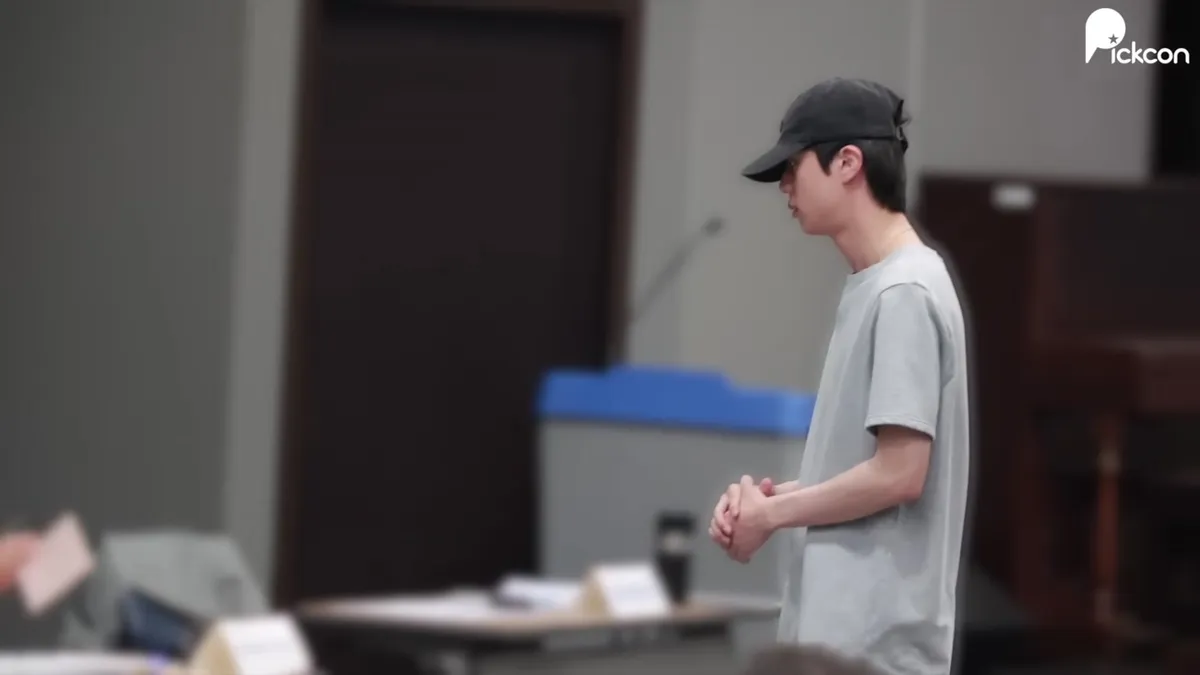
BTS Jin's gray top and black cap drew attention
BTS member Jin was spotted at a polling station in Hannam-dong, Seoul, wearing a gray top and a black cap. It was an ordinary outfit, but in election-season entertainment coverage, that very ordinariness stood out. Within fandom spaces, it has already become common practice to avoid colors that may call to mind political parties, such as red, blue, yellow or green, and to minimize hand gestures that could be interpreted as campaign signals.
The real issue lies less in the act of voting itself than in the way everything around it is read. An idol has the right to vote as a citizen, but at the same time is a public brand backed by a huge fandom and advertising market. Even when no political message is intended, the moment a single color is treated as if it were a message, the burden of explanation begins. It is a structure in which something can be consumed as a statement even when nothing was said.
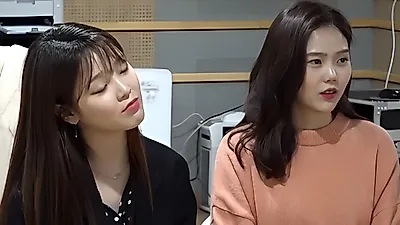
A public post by Jin, formerly of Lovelyz, was consumed in the same flow. She reportedly pointed out a shortage of ballot papers and mentioned the need for a revote. Her post raised a question about election procedures, but among some overseas fans it soon developed into controversy over political inclination. The issue was not proving what she actually believes; rather, it confirmed again that a public remark by a K-pop star now has to pass through both South Korea's domestic political context and the value judgments of overseas fandoms.
Ballot papers ran short at 50 polling places, and voting was temporarily halted at 22
The election was controversial beyond the entertainment industry as well. There were about 14,300 polling stations nationwide, and 50 of them required additional ballot papers after supplies ran short. At 22 polling stations, voting was temporarily stopped because of delays in resupply. The final turnout was 63 percent, and it was confirmed that ballot papers equivalent to 73 percent of all eligible voters had been prepared, reflecting strong early voting interest.
There is a clear reason these numbers entered an entertainment story. Idols did not bring up politics first. Instead, the management of the election itself became a major social issue, and even a single sentence from an idol was pulled into that wider debate. A fandom is not only a community that watches music and performances. It is also a space where people of different nationalities, generations and political instincts respond differently to the same star.
Overseas fans, in particular, may not know every color convention in Korean elections. If they do not understand that red and blue can call specific parties to mind, that a hand gesture showing a number may be read as a candidate number, or that a single voting proof photo can be amplified rapidly in online communities, reactions can become harsher. For domestic readers, a K-pop star's cautious voting post may look familiar and predictable. For overseas fans, the same restraint can be read as sudden silence or an ambiguous attitude.
Lee Young Ji's apology and Baek Ji-heon's outfit change
In the Korean entertainment industry, an unwritten rule returns every election season. Celebrities avoid strong party colors, reduce hand gestures that could be read as numbers and even check the background of voting proof photos. During the 2024 general election as well, several idols and actors were interpreted in unintended ways because of clothing colors, finger shapes or background objects. This time, Lee Young Ji apologized over styling that could appear red, while fromis_9's Baek Ji-heon changed into darker clothing after her blue outfit was mentioned during a live broadcast.
It is difficult to dismiss this situation simply by saying fans are too sensitive. The K-pop industry has grown through a structure in which fan participation translates into market power. Album purchases, streaming, voting and even advertising boycotts all appear as numbers, and those numbers can affect brands and contracts. This does not mean an individual idol's freedom of expression must disappear. But companies and artists need to move with the awareness that words and photos posted on public accounts can pass through fandom value judgments, advertisers' risk calculations and translations in overseas communities before expanding into an entirely different issue.
For agencies, this is not merely image management. If a comeback, advertisement or overseas performance is approaching, even a small controversy can remain in search results and short-form clips for a long time. Once demands for clarification begin within a fandom, an agency must decide whether to issue an official statement, remain silent or have the artist explain directly. Whichever choice is made, energy unrelated to music activity is drained away. That is why neutral colors during election season are less a passive posture than a minimum operating method for reducing unnecessary misunderstanding.
What this controversy confirms is not who supported which side. Encouraging people to vote carries the public value of civic participation, and a system that only forces idols into political silence will be difficult to sustain over time. At the same time, if every color and hand gesture is dismissed as pure coincidence, unnecessary controversy can continue to repeat.
The most realistic response is to state voting participation clearly while reducing elements that are likely to be read as support for a specific party or candidate, and, when a problem arises, to clarify the facts before discussing political position. Fandoms carry the same assignment. Criticism of public activity is possible, but the moment an unverified political inclination is attached like a label, the discussion leaves music and activity behind and turns into a personal attack.
Related articles