Kwon Eunbi Diet Comments Renew K-pop Health Management Debate
Kwon Eunbi's past diet comments drew renewed attention as fans discussed health management standards for K-pop artists.
Revenue in South Korea’s pop culture and arts industry grew to 15.3845 trillion won in 2024. Over the same period, the number of registered pop culture and arts management companies also rose to 4,471. At a moment when the market surrounding K-pop has expanded so sharply, the renewed circulation of posts collecting past diet confessions from female artists, including Kwon Eunbi, is difficult to dismiss as simple gossip. This article does not reproduce the specific methods described in those diet stories. Instead, it examines why this kind of self-disclosure content is again forcing a discussion about where the boundaries of K-pop management discourse should be drawn.

As the numbers grow, the meaning of “management” changes as well.
The Korea Creative Content Agency’s 2025 survey on the pop culture and arts industry shows how quickly the environment around K-pop has expanded. Industry revenue, which stood at 11.4362 trillion won in 2022, increased to 15.3845 trillion won in 2024. The number of registered pop culture and arts management companies rose from 3,758 to 4,471 over the same period. As global fandom and overseas activities have expanded, the language of training, styling, and promotion that creates the image seen on stage has also become visible to a much wider audience.
The change in pop culture and arts industry revenue and registered management companies, based on the Korea Creative Content Agency’s 2025 survey, can be summarized through a comparison of 2022 and 2024 indicators. Revenue rose from 11.4362 trillion won in 2022 to 15.3845 trillion won in 2024, while the number of registered companies increased from 3,758 to 4,471. Source: Korea Creative Content Agency 2025 pop culture and arts industry survey.
In a growth industry, “management” no longer means only an individual’s severe determination. It is closer to the name of a system that coordinates activity schedules, choreography intensity, nutrition, rest, and media exposure. That is why the point to examine when past diet confessions are shared again has also changed. More important than a description of who ate what is whether the story is read inside the industry as a warning or packaged as a routine that others can imitate.
The Kwon Eunbi case is not a matter of evaluating bodies, but of interpretation.
The original post discussed among overseas fandoms grouped together several names, including Kwon Eunbi, Lee So Ra, and Irene, while introducing past cases of strict diet control. The original text included a warning not to follow those examples. Online, however, this kind of content can easily turn into list-style information. The moment the specific items in a diet are repeated, the warning becomes weaker, and an artist’s experience is turned once again into a point of interest about appearance management.
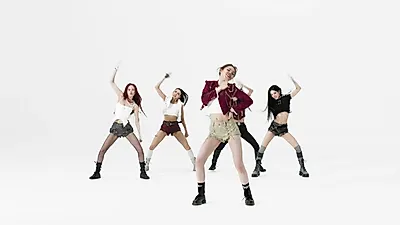
What can be seen in Kwon Eunbi’s official music video “SABOTAGE” is not evidence of a diet, but an image designed for her as a solo performer. The camera builds the song’s tension through facial close-ups, strongly colored lighting, and quick cuts. What fans see is a stage language created by music, choreography, hair and makeup, and editing working together. Reducing that image to the result of a particular diet or weight-management practice narrows both the appreciation of the work and the respect owed to the artist.
Articles dealing with this subject therefore need two clear boundaries. First, even if the past experience was disclosed by the artist herself, the detailed method should not be reproduced. Second, the artist’s current appearance or health status should not be guessed. Only when those lines are observed can a diet confession become material for reviewing K-pop industry management standards rather than a stimulus for sensational consumption.
Youth protection standards point to the industry’s responsibility.
The culture ministry’s standard supplementary agreement for young pop culture and arts performers provides an institutional standard needed for this discussion. The agreement specifies the protection of basic rights, including freedom of choice, the right to learn, personal rights, and the right to sleep, and includes bans on assault, coercion, and threats. It also presents working-hour standards for pop culture and arts services by age group, translating protection provisions from a declaration into the language of contracts.
Of course, that agreement is not a document that directly addresses diets. Even so, its principle is clear: the rights of young artists and trainees cannot be placed outside the industry’s cost calculations. K-pop’s fan base also includes many teenagers. For that reason, content that leaves only the phrase “it was extreme” is not sufficient for either artists or readers. Only when protection standards are presented together does the story become context rather than consumption.
Agencies and platforms are subject to the same standard. The more official content places vivid visuals at the forefront, the greater the responsibility to explain whether the process of maintaining those visuals is connected to healthy systems of training, nutrition, and rest. This is not a demand that every detail of private life be disclosed. It means the language of editing and promotion must be adjusted so that dangerous self-management narratives are not consumed as if they were professionalism.
The next checkpoint is whether the warning is visible.
The next checkpoint in this issue is not Kwon Eunbi’s new activity schedule or any change in appearance. More important is what kind of sentences will be used when related posts and videos are shared again. The criteria are whether the warning is clear in the title, whether the body text avoids organizing a specific diet as if it were useful information, and whether fandom reaction avoids drifting toward evaluation of the artist’s current body.
K-pop is already a large industry by the numbers. A large industry needs a more precise way of explaining itself. When dealing with diet confessions, the reader’s real interest is not sensational detail, but clear guidance on what should not be imitated and what management standards should be required. K-pop’s credibility is shaped not only by the completeness of the stage, but also by the sentences used to handle the stories outside it.
Related articles